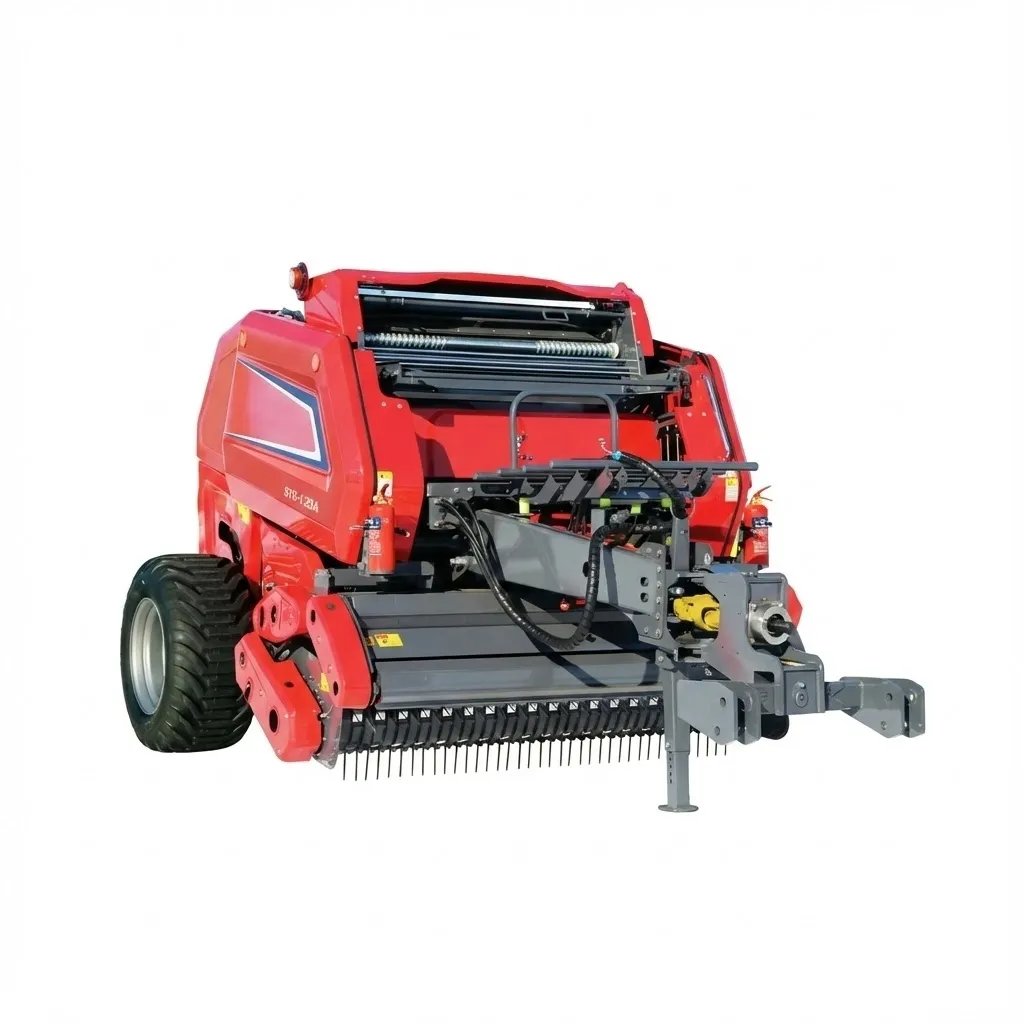
Description
| Specification | Detail |
|---|---|
| Model | 9YG-1.25A |
| Pick-up Width | 2,150 mm |
| Bale Diameter | 1,300 mm |
| Bale Width | 1,250 mm |
| Power Required | ≥75 kW |
| Output | 40–100 bales/hr |
| Bale Density | 100–200 kg/m³ |
| Pick-up Options | Spring-tooth OR Hammer-claw (interchangeable) |
| Crop Compatibility | 80+ crop types |
| Machine Weight | 4,472 kg |
| Feeding System | Axial-flow semi-forced |
| Density Control | Electronic sensor |
The Multi-Crop Round Baler: Interchangeable Pick-Up for 80+ Crop Types
Most round balers are designed for a specific application category. The Ever-Power 9YG-1.25A takes a different approach: it is engineered from the outset to handle the full spectrum of forage and crop residue types encountered on mixed farming operations, with a user-changeable pick-up system that switches between spring-tooth and hammer-claw configurations without specialist tools or dealer involvement.
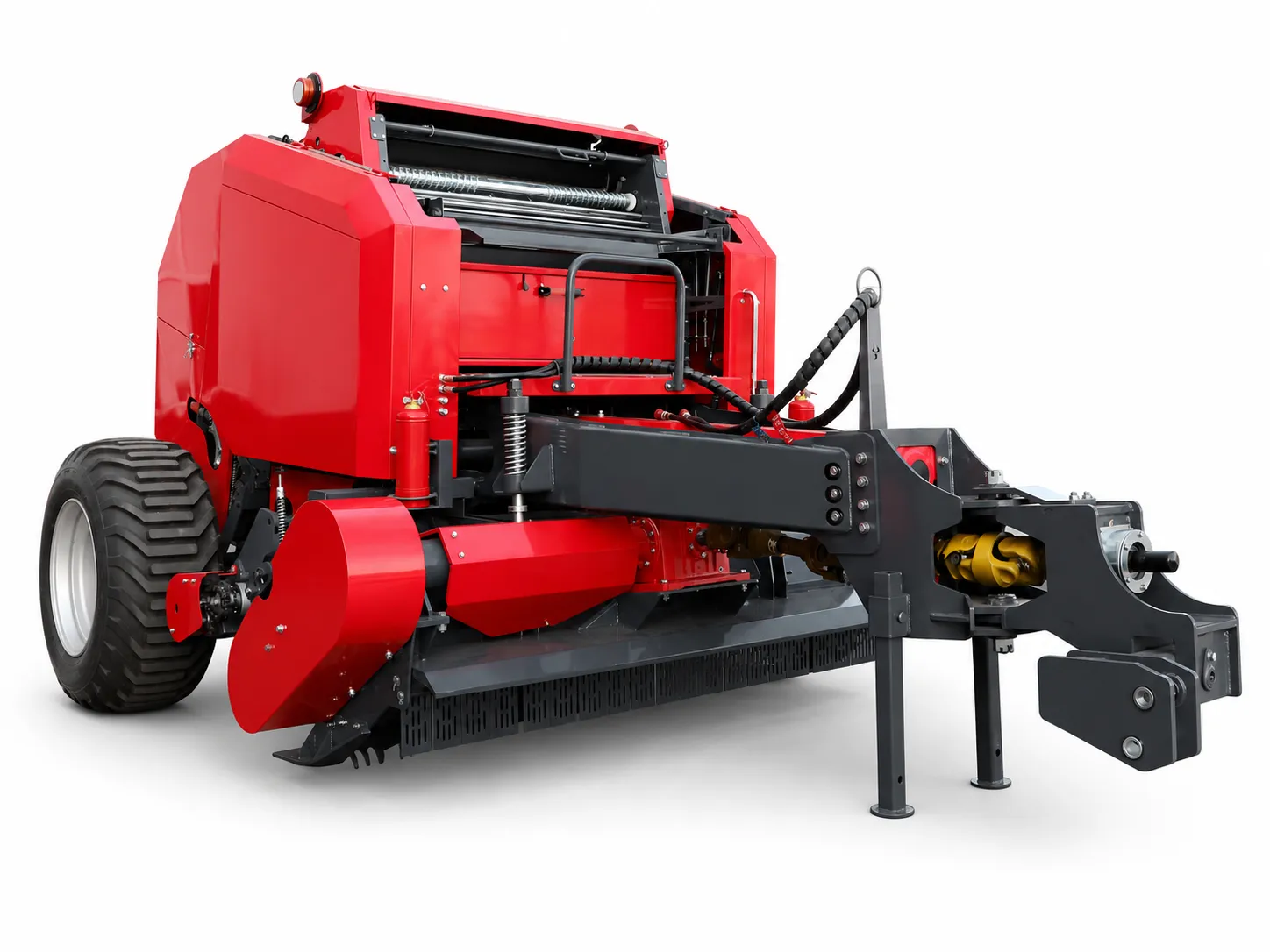
This single engineering decision — interchangeable pick-up heads — transforms the 9YG-1.25A from a single-crop tool into a seasonal workhorse. Spring hay in October, wheat straw in January, corn stalk in April: the same machine handles all three with the appropriate head for each application. The alternative — separate machines for each crop category — represents a capital cost multiple that most mixed farming operations cannot justify.
Two Pick-Up Systems: Understanding the Engineering Difference
Spring-Tooth Pick-Up: The Windrow Harvesting Standard
The spring-tooth head is the standard configuration. It is the optimal design for windrow material — cut, conditioned, and raked forage lying flat on the ground surface. Flexible spring-steel tines penetrate the windrow from above, flick material upward into the intake throat, and retract without damaging the soil surface. The action is gentle enough to avoid picking up soil and stones with the crop material — an important quality consideration for hay destined for animal consumption — while aggressive enough to gather thin, sparse windrows cleanly. Spring tines also self-clean when they encounter minor obstructions: a stone deflects the tine momentarily, then spring tension returns it to working position without damage.
Hammer-Claw Pick-Up: Direct Standing Crop Collection
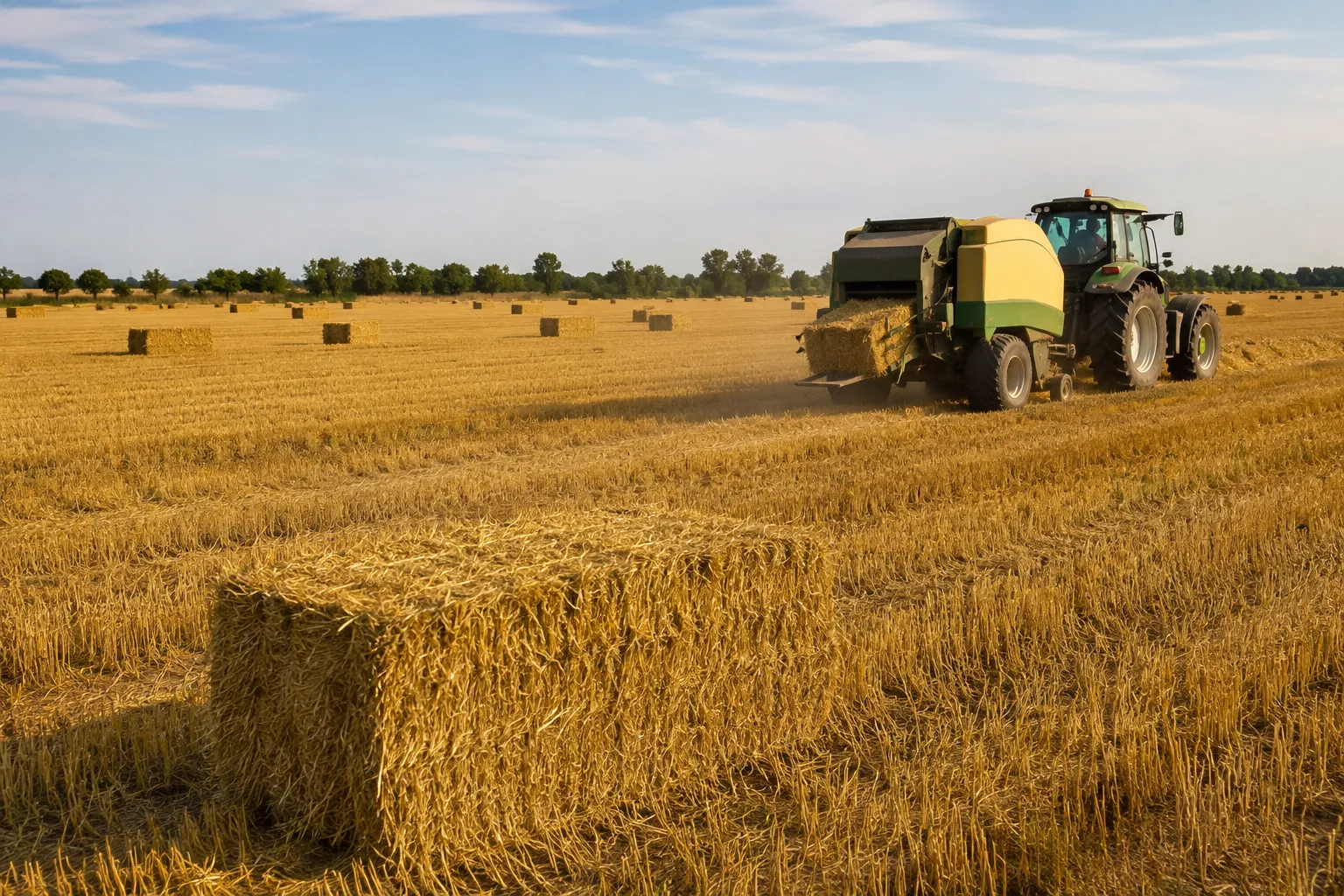
The hammer-claw head enables standing crop collection without pre-cutting. Where spring tines rely on material being already flat on the ground, the hammer-claw mechanism physically engages upright standing material — corn stalks, sorghum, sunflower, cotton stalk — and draws it into the axial-flow feeding system. The claw profile provides the aggressive mechanical engagement required to pull standing stalks from the field and redirect them into the baling chamber.
The operational consequence is significant. Traditional corn residue management involves mowing the stalks, raking them into windrows, and then baling — three tractor operations across the same ground. With the hammer-claw head, the collection process reduces to a single direct baling pass. The intermediate mowing and raking operations are eliminated, along with their associated fuel cost, time cost, and soil compaction.
Three-Pass to One-Pass Economics: For an operation collecting corn stalk from 150 hectares annually, eliminating mowing and raking passes saves approximately 300 tractor-hours per season. At Argentine contractor rates, this represents a direct operating cost saving that makes the 9YG-1.25A's additional purchase cost recoverable within two to three seasons of corn stalk operations.
Axial-Flow Semi-Forced Feeding: Consistent Intake Across Variable Crop Types
The axial-flow feeding mechanism is the enabling technology that allows the 9YG-1.25A to handle both fine windrow material and bulky standing crop with the same baling chamber. Conventional direct-feed intakes are optimised for one material density range — they feed light hay efficiently but block on thick stalk, or they handle stalk but leave thin hay windrows feeding inconsistently.
The axial-flow system uses directional flow geometry that actively guides material through the intake regardless of whether it arrives as thin hay windrow or dense standing corn stalk. The controlled flow path prevents the turbulent material accumulation that causes blockages in conventional intakes. The measured result is a 50% reduction in blockage frequency under equivalent crop conditions across both spring-tooth and hammer-claw configurations.
Application: 80+ Crop Types in Practice
The documented 80+ crop compatibility covers the full range of forage and residue types across Argentine and global agricultural systems. Specific examples beyond the core categories:
- Soybean straw: Fine, brittle residue after soybean harvest. Spring-tooth head handles thin windrows effectively.
- Sunflower stalk: Bulky, high-diameter stalk. Hammer-claw for direct collection, spring-tooth for raked material.
- Cotton stalk: Woody residue with variable stem thickness. Hammer-claw head recommended for standing collection.
- Reed and reedgrass: Tall, dense vegetation. Spring-tooth handles raked material from specialised mowing.
- Native grassland: Mixed species with variable stem thickness. Spring-tooth manages the density variation across species.
Standing Corn Stalk Collection: Operational Sequence
Operating the 9YG-1.25A in standing corn requires different technique to windrow baling. Rather than following a pre-formed windrow at consistent depth, the operator drives the machine directly into standing stalk rows, positioning the hammer-claw pick-up to align with the planted row geometry. The 2,150 mm working width typically spans 2–4 corn rows depending on planted spacing.
The hammer-claw mechanism engages standing stalks and feeds them into the axial-flow system. Operating speed is determined by the resistance the machine experiences — 4–7 km/h is typical in standard corn stalk conditions, with higher stalk density requiring slower forward speed to avoid intake overload. The resulting bales achieve density typically 80–140 kg/m³ — lower than hay because of the coarser structure of stalk material — but structurally coherent for storage and handling.
Head Change Procedure
Changing between heads is designed for on-farm execution by a single operator without specialist assistance. The process involves: parking on level ground, lowering the pick-up to service position, removing head attachment bolts (typically 6–8 points), disconnecting the tine arm drive coupling, removing the existing head, installing the replacement in reverse order, and torquing fasteners to specification.
An experienced operator completes the change in 30–45 minutes. For a first-time change, allow 60–90 minutes and use the illustrated procedure in the operator manual. Our Buenos Aires technical support team can provide a video walk-through of the first head change if requested at [email protected].
Why Ever-Power: Verifiable Credentials
Ever-Power Forage Baler S.A. holds ISO 9001:2015 certification (audited by Beijing United Certification), National High-Tech Enterprise recognition (Cert. GR202315000192), and over 100 registered technology patents covering core machine design elements. Two consecutive years of category market leadership, AAA Credit Enterprise rating, and the AGMA Best Innovation Award 2023 provide independently verifiable quality and performance credentials.
Real-World Operating Scenario
A mixed cropping operation in Córdoba Province running 400 hectares of lucerne and 250 hectares of corn uses the 9YG-1.25A as its only baling machine. Spring through late summer, the operation runs the spring-tooth head for lucerne and pasture baling. In late autumn after corn harvest, the operator changes to the hammer-claw head over a single morning, then collects 250 hectares of standing corn stalk directly — eliminating the previously required mowing and raking passes. The annual saving from removing the corn pre-processing steps covers approximately one third of the machine's annual depreciation, making the dual-head capability self-funding from corn stalk operations alone.
Comparison: 9YG-1.25A vs 9YG-1.25
| Feature | 9YG-1.25A | 9YG-1.25 |
|---|---|---|
| Pick-up Width | 2,150 mm | 2,240 mm |
| Pick-up System | Interchangeable: spring-tooth + hammer-claw | Spring-tooth (interchangeable options available) |
| Corn Stalk — Standing | Direct collection with hammer-claw | Cut and raked only with standard head |
| Machine Weight | 4,472 kg | 4,060 kg |
| Best For | Mixed crop operations — hay and standing residue | Primarily hay, straw, and windrow forage |
Five-Year Total Cost of Ownership
The 9YG-1.25A's additional purchase cost over a standard hay baler is recovered through corn residue operations savings. For an operation collecting 100+ hectares of corn stalk annually, the savings from eliminating mowing and raking passes (estimated at 200–400 tractor-hours per season) typically exceed the additional capital cost of the dual-head capability within two to three seasons. Beyond the recovery period, the machine continues to deliver the dual-purpose flexibility as a pure operational benefit.
Frequently Asked Questions
Does the 9YG-1.25A come with both pick-up heads?
The machine ships with the spring-tooth head as standard. The hammer-claw head is an additional purchase option. Contact [email protected] to include the hammer-claw head in your order.
What is the minimum stalk height for standing collection?
Minimum stalk height for effective direct collection is approximately 0.8–1.0 metres. Below this height, hammer-claw engagement becomes inconsistent. For shorter residue, raking the material into windrows before baling with the spring-tooth head is recommended.
Can the 9YG-1.25A handle silage baling?
Yes. The spring-tooth head and high-pressure compression chamber produce bales suitable for plastic film wrapping and silage storage. Sensor density control maintains the bale density required for reliable fermentation quality.
What is the axle loading when using the hammer-claw head in standing corn conditions?
Standing corn collection creates higher draft loads than windrow collection due to the resistance of standing material. We recommend confirming tractor drawbar capacity and ensuring tractor front axle weighting is adequate for the draft loads generated. Contact us if uncertain about your tractor's suitability for standing corn applications.
What documentation is provided with the machine?
Every machine ships with English-language operator and maintenance manual, warranty certificate, certificate of conformity, parts catalogue, and installation checklist. For export orders, commercial invoice, certificate of origin, and phytosanitary certificate accompany shipment.
How do I order spare parts after delivery?
Contact [email protected] with your machine serial number and the part number from the parts catalogue. We confirm availability and dispatch from our Buenos Aires warehouse within one business day, with 5–7 day delivery to most locations.
Why Ever‑Power: Verifiable Manufacturer Credentials
For a capital machinery purchase, manufacturer credibility is a legitimate question. Every credential cited for the 9YG-1.25A is independently verifiable.
- ISO 9001:2015 Certification — Issued by Beijing United Certification (IATF-accredited). Covers design, manufacturing, and after-sales processes. Renewed on a three-year audit cycle.
- National High-Tech Enterprise, Cert. GR202315000192 — Government-issued recognition requiring documented R&D investment, qualified personnel ratios, and intellectual property holdings.
- 100+ Registered Technology Patents — Patent registration numbers available for verification through national patent registries.
- AAA Credit Enterprise Rating — Independent financial stability assessment.
- AGMA Best Innovation Award 2023 — Independent industry panel recognition at the International Agricultural Machinery Expo.
- Market Leadership 2023 and 2024 — Two consecutive years ranked first in the versatile round baler category.
Real-World Operating Scenario
A mixed cropping operation in Córdoba Province running 400 hectares of lucerne and 250 hectares of corn uses the 9YG-1.25A as its only baling machine. Spring through late summer, the operation runs the spring-tooth head for lucerne and pasture baling. In late autumn after corn grain harvest, the operator changes to the hammer-claw head over a single morning, then collects 250 hectares of standing corn stalk directly — eliminating the previously required mowing and raking passes. The annual saving from removing corn pre-processing steps covers approximately one third of the machine's annual depreciation, making the dual-head capability self-funding from corn stalk operations alone.
Comparing Ever-Power to Established European Brands
Buyers evaluating the 9YG-1.25A typically also consider established European alternatives. Three honest comparison points clarify the decision. On price, Ever-Power machines carry a 25–45% advantage at equivalent specification levels — reflecting manufacturing cost differences, not quality compromises. The same ISO 9001:2015 standards apply across certified facilities regardless of cost environment. On specification, the 9YG-1.25A's key technical features — sensor density control, axial-flow feeding, camless pick-up where applicable — match or exceed equivalent-class European machines. On parts availability, established European brands have decade-old Argentine distribution networks; Ever-Power Forage Baler S.A.'s Buenos Aires operation is newer but stocked for current-model support with 5–7 day delivery to most provinces.
Integration with the Full Ever-Power Forage Chain
The 9YG-1.25A is designed for operations spanning multiple crop types. Combine it with the 9GQY-3.2 mower conditioner for hay operations, with the 9LH-12 rake for windrow formation in hay season, and with corn stalk applications run using the hammer-claw head. For silage operations, pair with the 9YCM-850 baler-wrapper for one-pass production. The 9JYY-4.5 heavy-duty transporter handles the large volume of bales generated from corn stalk seasons.
For operations transitioning to dual-head capability from separate hay and corn stalk machines, the 9YG-1.25A consolidates two machines into one. The capital cost saving and reduced fleet maintenance burden are the primary financial drivers of this transition.
Total Cost of Ownership Over Five Seasons
Over five seasons, the 9YG-1.25A's ownership economics are driven by its dual-purpose capability. The additional purchase cost above a standard hay baler is recovered through corn stalk operations savings within two to three seasons. Beyond the recovery period, the dual-head capability continues to deliver operational flexibility as a pure benefit. Annual maintenance typically runs 2–4% of purchase price for a well-maintained machine. Main cost centres are pick-up tines (replaced at 800–1,200 bales), chains (3–5 season replacement), net wrap knives (annual), and bearings (2–3 year cycle). Downtime cost during peak harvest has opportunity value — bales not made during optimal windows either require re-cutting at lower quality or are lost. ISO-certified construction supports residual value retention in the secondary market.
Pre-Purchase Qualification Checklist
- Tractor produces at least the rated PTO power — verified against rated specification, not nameplate engine power
- Annual bale volume matches the machine's optimal throughput range
- Storage and handling infrastructure compatible with the bale format produced
- Service access supports 5–7 day parts dispatch from Buenos Aires
- Lead time of 30–60 days from order accommodates seasonal planning
Send your answers to [email protected] for a personalised recommendation and quotation within 24 hours.
Order Process and Delivery Timeline
Day 1–2: enquiry and quotation with CIF price returned within 24 hours. Day 3–7: order confirmation with deposit, production slot allocated, delivery date confirmed. Day 5–65: production (30–60 days depending on schedule). Quality inspection, documentation preparation, and container loading at our Parque Industrial Pilar facility follow. Ocean freight from Buenos Aires to destination port follows. After port arrival, buyer arranges customs clearance and inland transport. Within 7 days of farm arrival, remote video commissioning support from our Buenos Aires team is available for first setup and operation.
Technical Deep Dive: How the 9YG-1.25A Performs in the Field
The 9YG-1.25A's operational versatility is most clearly demonstrated during the seasonal transition from hay season to corn residue season. On a morning in April, an operator might complete the last lucerne baling run of the spring season with the spring-tooth head installed. After completing that paddock, they park the machine, remove the spring-tooth head in 40 minutes, install the hammer-claw head, and drive into the corn paddock for the first standing stalk collection run of the afternoon.
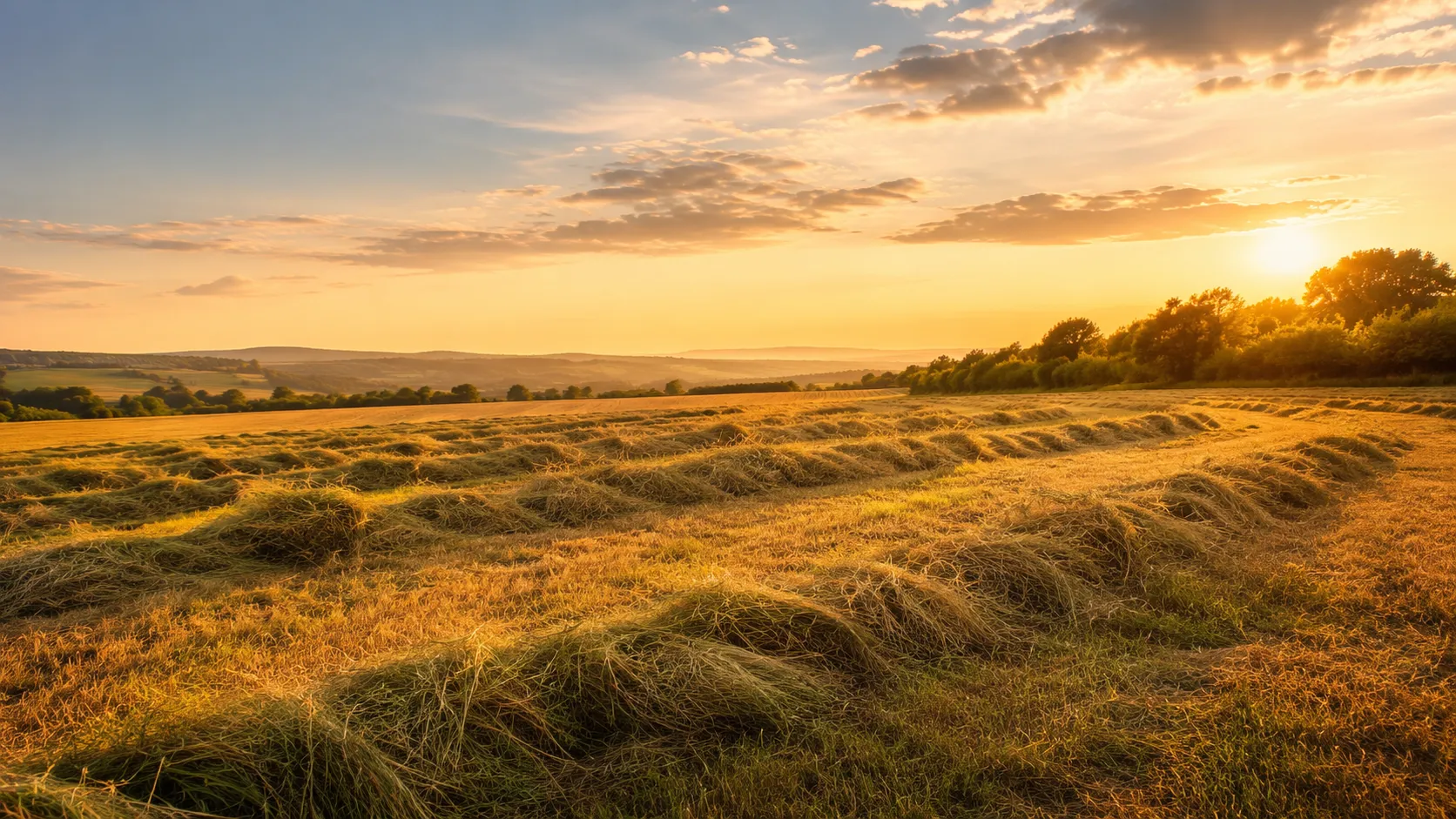
The same machine, the same day, two completely different crop collection applications. The axial-flow feeding system's consistency across both head types means transitioning between applications does not require recalibration of feeding geometry — the operator adjusts the target density setting and the machine is ready. This operational flexibility is the 9YG-1.25A's most distinctive and practically valuable characteristic.
For operations with mixed crop calendars where hay and standing residue collection are both annual requirements, the dual-head capability eliminates the need to choose between specialised single-purpose machines or compromised general-purpose alternatives. The 9YG-1.25A is purpose-built for the multi-crop application, not adapted from a single-purpose design.
Agronomic and Regional Application Context
Argentine agricultural regions present distinct operational requirements that the 9YG-1.25A addresses through its capability specification.
Buenos Aires Province — Pampas Humid Zone
The humid pampas of Buenos Aires Province represent Argentina's most productive forage zone. Deep mollisol soils and annual rainfall of 800–1,200 mm support multiple-cut improved pasture systems with ryegrass, fescue, lucerne, and legume species. Operations here face short drying windows between rainfall events and high annual forage yields demanding capable equipment throughput.
Córdoba Province — Mixed Farming Transition Zone
Córdoba's mixed crop and livestock systems cycle through spring forage, summer grain production, and autumn residue management. The 9YG-1.25A's capability covers this seasonal rotation, providing a single machine that contributes usefully across multiple crop types rather than operating for only one segment of the agricultural calendar.
Santa Fe and Entre Ríos — Intensive Livestock and Dairy
Intensive dairy and beef operations require consistent forage quality. Bale density specifications and quality standards that affect livestock nutrition outcomes make the 9YG-1.25A's quality control features directly relevant to commercial performance.
Patagonia and Semi-Arid Zones — Extensive Operations
Extensive grazing systems operate with limited service infrastructure. Equipment must be reliable over long operating periods between service opportunities. ISO-certified construction and low-maintenance design priorities reduce service frequency required and the consequence of service delays during critical operating periods.
ISO9001‑Certified Manufacturing
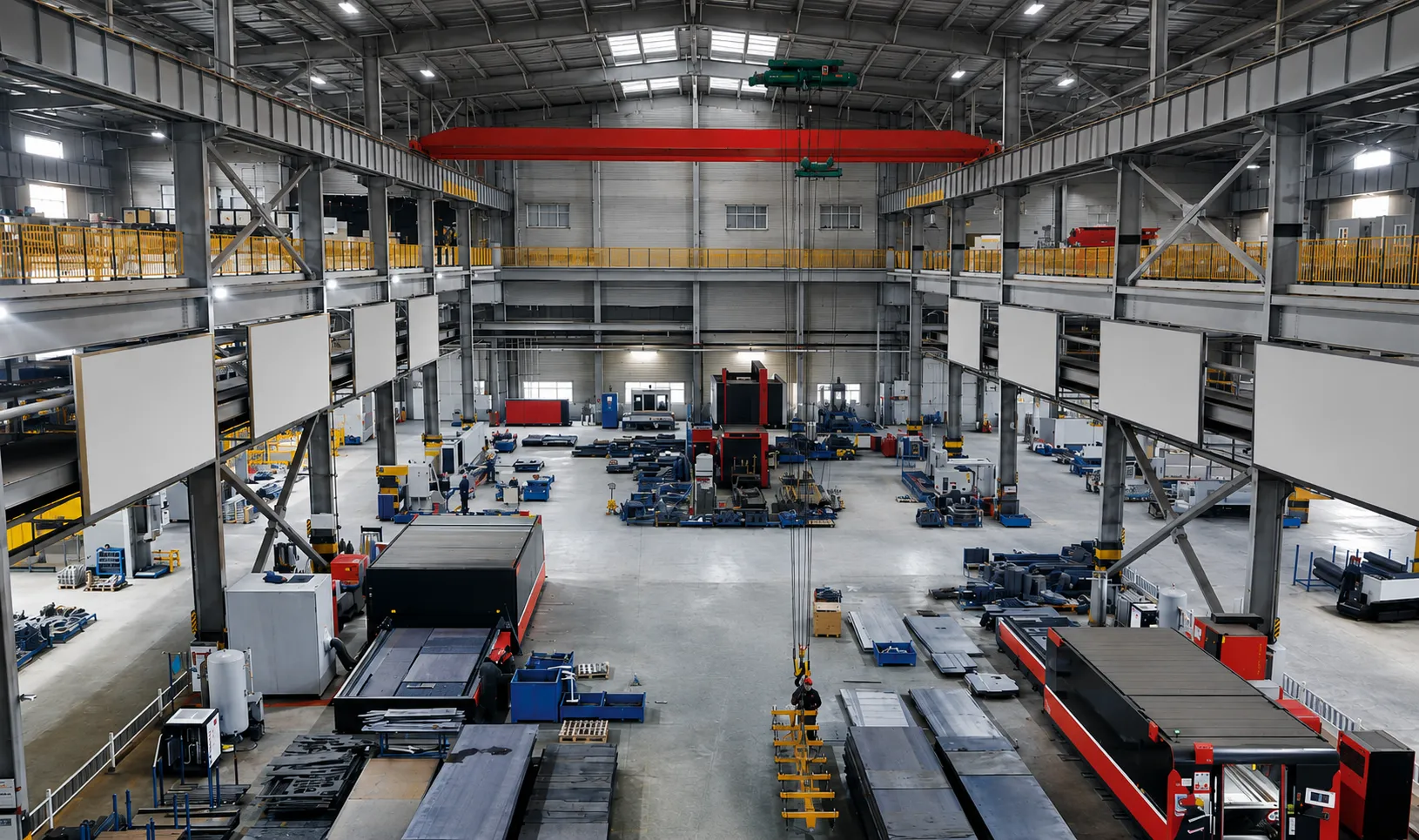
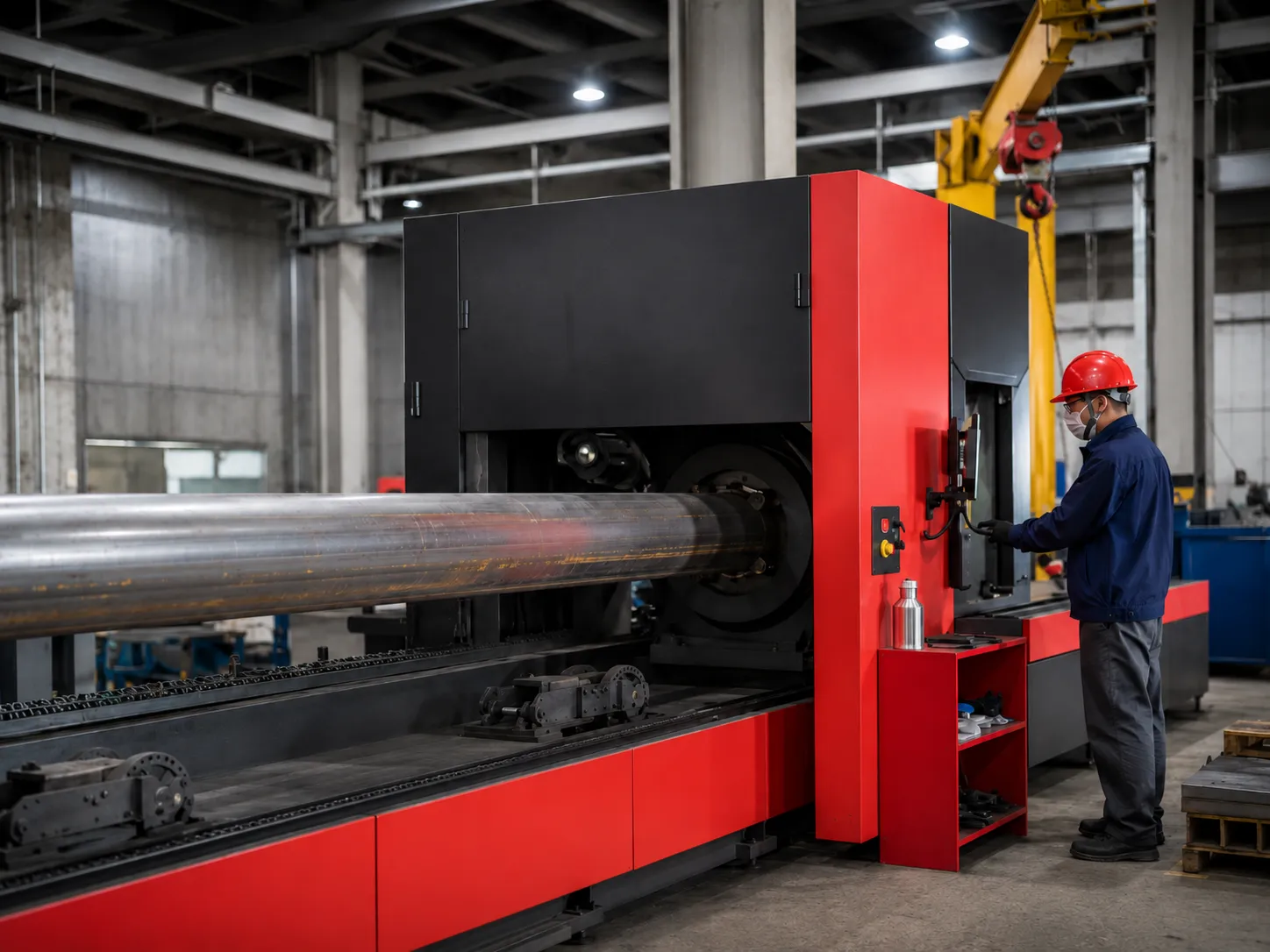
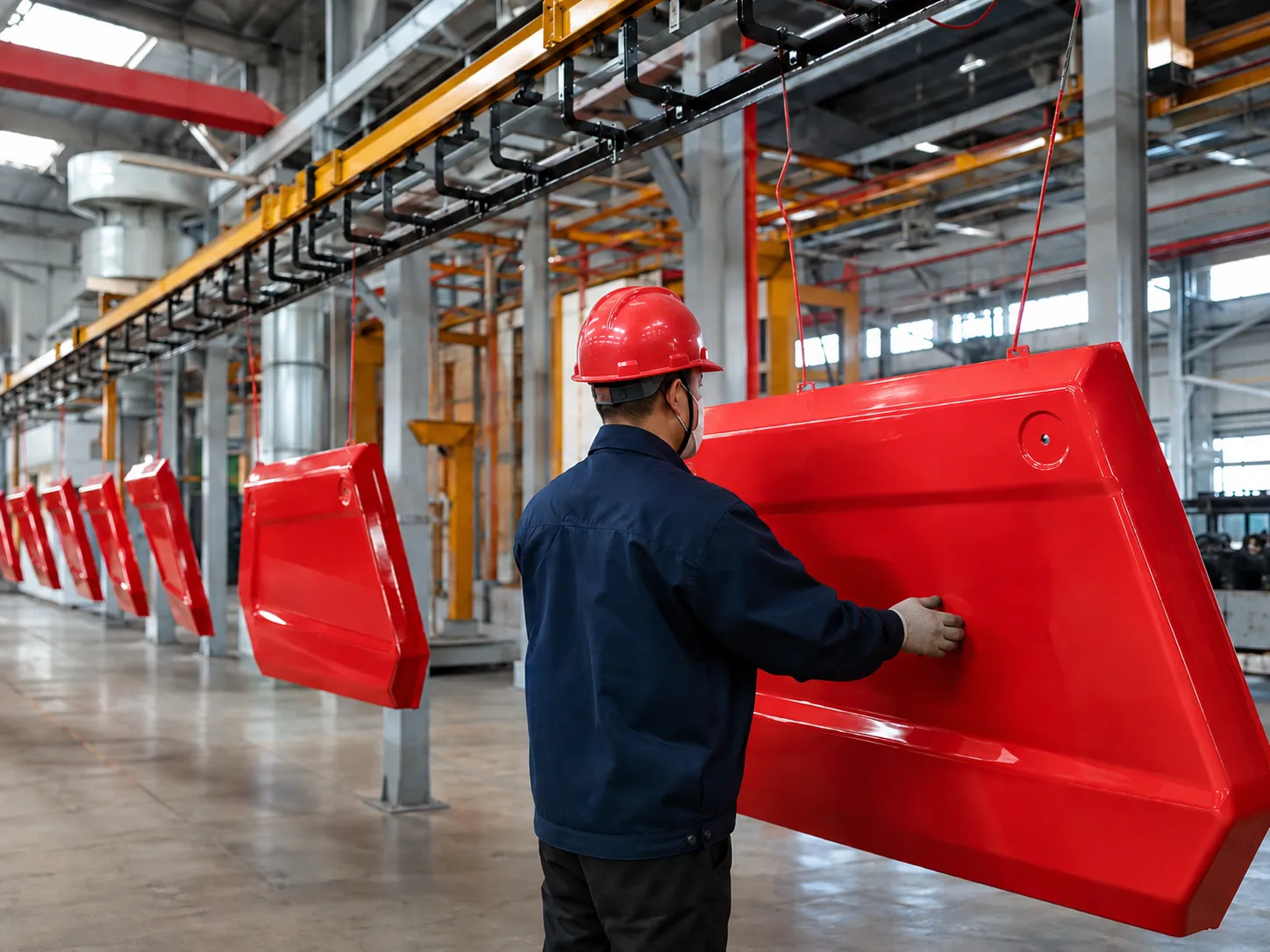
ISO 9001:2015 certification covers design, manufacture, and after‑sales. 100‑plus registered technology patents. CNC cutting, robotic welding, and electrostatic coating documented in our quality management system.
Warranty and After‑Sales: Manufacturer's warranty included. English‑language documentation. Dedicated Argentine technical support. Parts dispatched from Parque Industrial Pilar within 5–7 business days.
Explore Ever-Power Forage Equipment
Ask for a Full Spec Sheet and Quote Today
Receive a complete technical specification sheet, current lead time, and competitive pricing. Every enquiry answered within 24 hours.
Shipping: Export‑ready from Argentina. CIF to Buenos Aires, Rosario, Bahía Blanca, or any international port. [email protected].
Reviews
There are no reviews yet.