Description
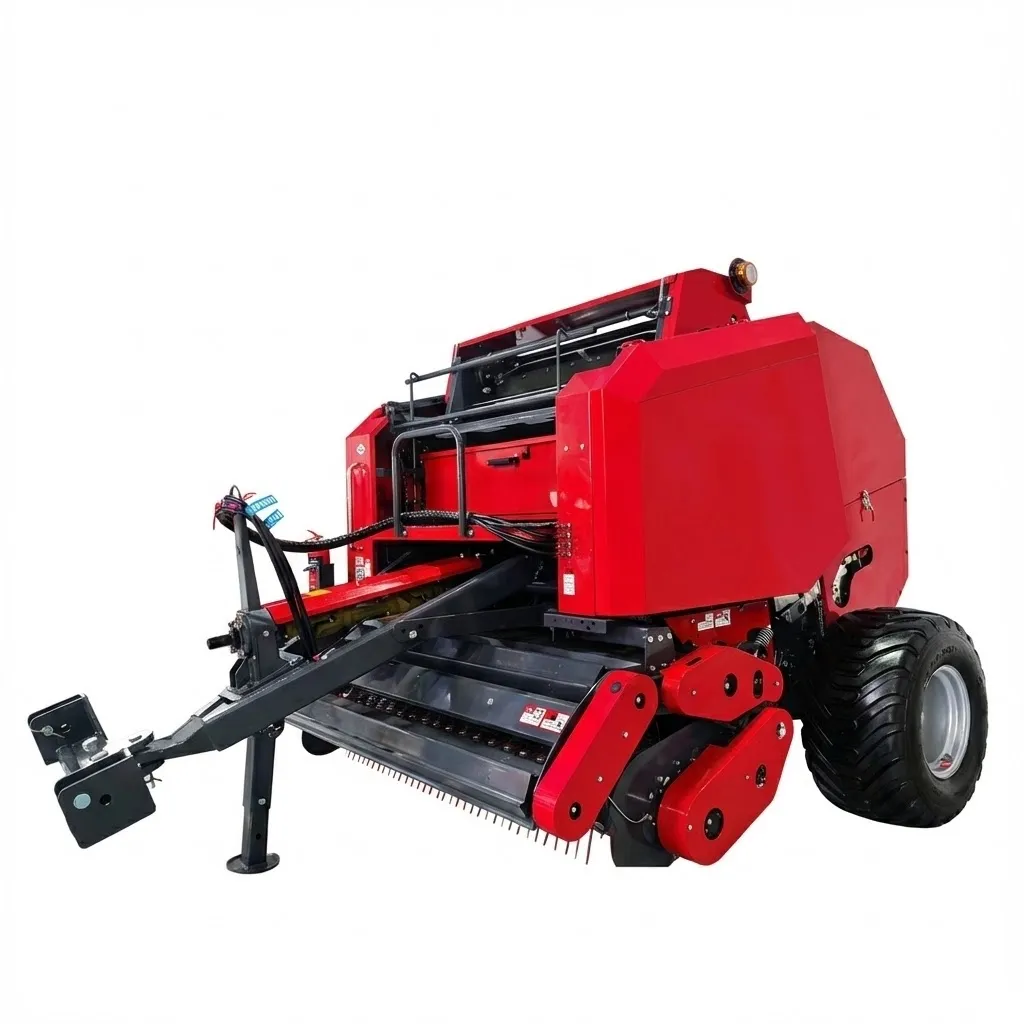
| Specification | Detail |
|---|---|
| Model | 9YG-2.24D Standard |
| Pick-up Width | 2,240 mm |
| Bale Diameter | 1,300 mm |
| Bale Width | 1,400 mm |
| Power Required | 55–100 kW |
| Output | 40–100 bales/hr |
| Bale Density | 100–200 kg/m³ |
| Net Wrap | Automatic |
| Density Control | Electronic sensor |
| Machine Weight | 4,570 kg |
| Feeding System | Axial-flow semi-forced |
| Chain System | Dual-sided 20A |
Sensor-Density Commercial Baler: Consistent Commercial Bale Quality
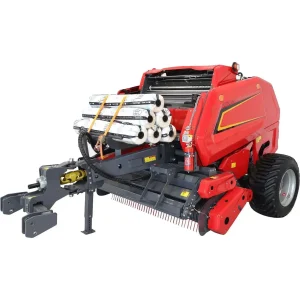
The Ever-Power 9YG-2.24D Standard delivers the same compression chamber, pick-up width, and output capacity as the S9000 Pro and Classic models, with the focus on sensor-controlled bale density as the primary value driver for commercial hay operations. For farms and contractors where bale density consistency directly affects commercial pricing — particularly those selling to processors, feedlots, or export buyers who specify minimum density — the 9YG-2.24D Standard provides the production tool that delivers consistent commercial specifications across operators, seasons, and crop conditions.
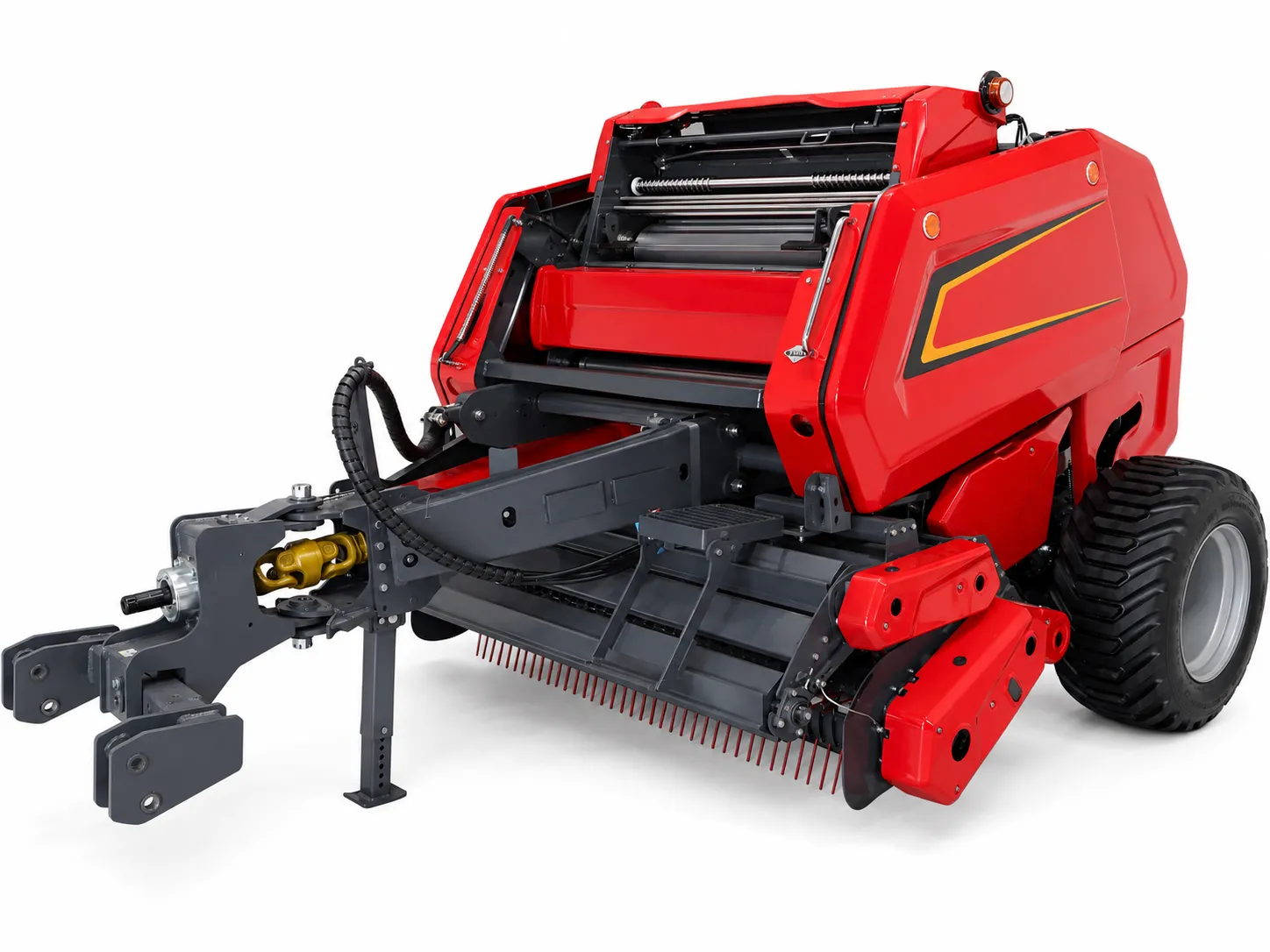
At 4,570 kg working weight, with a 2,240 mm full-width pick-up and 40–100 bales per hour output, the 9YG-2.24D Standard is a commercial-class machine designed for properties producing 1,500–3,000 bales per season. The 1,300 x 1,400 mm bale format is the de facto Argentine commercial standard, compatible with the widest range of bale handling, transport, and processing equipment in the market.
Electronic Sensor Density Control: Why It Matters Commercially
Bale density variation has a direct commercial cost in markets where buyers specify minimum density. Without sensor control, density depends on operator skill, attention to windrow conditions, and recognition of moisture changes through the day — variables that change between operators, between days, and between paddocks. The result is bale-to-bale variation that ranges from acceptable to marginal, with some bales meeting buyer specifications and others falling short.
The 9YG-2.24D Standard's sensor system removes this variability. Compression pressure is monitored continuously throughout the baling cycle, with the system automatically adjusting chamber force to maintain the operator's target density. As windrow thickness varies, as moisture changes between morning and afternoon, as operators rotate — the sensor compensates. Every bale meets the same density specification.
Commercial Impact of Density Consistency: Premium-grade lucerne hay markets in Argentina typically specify minimum 150 kg/m³ density. Operations using sensor-controlled balers consistently meet this specification across the season; operations relying on manual pressure adjustment frequently produce a percentage of bales below specification. The resulting price differential per bale — over a season of 1,500–2,500 bales — typically exceeds the additional cost of sensor-equipped equipment versus simpler alternatives.
2,240 mm Full-Width Pick-Up
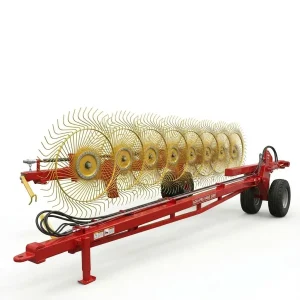
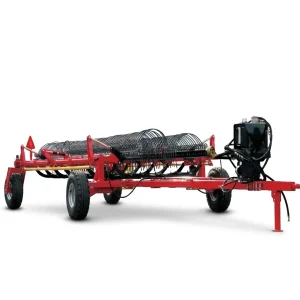
The 9YG-2.24D Standard uses a 2,240 mm full-width pick-up matched to the windrow widths produced by commercial-class mowers and rakes (2.5–3 m cut mowers feeding into 9–12 m rakes that consolidate into baler-width windrows). The full pick-up width captures windrows in a single pass without leaving edge material that would require a second gathering operation or be lost from the crop. For operations using Ever-Power 9LH-12 transverse rake or finger wheel rakes, the windrow output is matched to this pick-up width.
Axial-Flow Feeding
The axial-flow semi-forced feeding system delivers the same 50% blockage reduction as in the larger S9000 models. The directional flow geometry actively guides material through the intake rather than relying on passive crop momentum, maintaining consistent throughput in thick, tangled, or high-moisture conditions that cause blockages in conventional feed designs.
Crop Applications
The 9YG-2.24D Standard handles the full range of forage and residue crops across Argentine commercial operations:

- Lucerne (Alfalfa): The sensor system's value is most pronounced here. Premium-grade lucerne markets specify density minimums; the 9YG-2.24D Standard delivers consistent specification compliance across the moisture and density variation typical of full-season lucerne baling.
- Hay and Pasture: Mixed pasture, ryegrass, fescue, and clover-based hay. Sensor system supports commercial pricing consistency for operations selling to feedlots and dairy buyers.
- Silage Production: High-pressure chamber and consistent density support reliable fermentation when paired with the 9YCM-850 wrapper for one-pass production.
- Wheat, Barley, and Oat Straw: Axial-flow feeding handles abrasive straw without the blockage rates of conventional designs.
- Forage Crops: Whole-crop oats, barley, and triticale baling for stored forage. Consistent density supports storage efficiency.
Why Ever-Power: Verifiable Credentials
Ever-Power Forage Baler S.A. holds ISO 9001:2015 certification (audited by Beijing United Certification), National High-Tech Enterprise recognition (Cert. GR202315000192), and over 100 registered technology patents. The sensor density control system is one of the registered patent applications. AAA Credit Enterprise rating, AGMA Best Innovation Award 2023, and two consecutive years of category market leadership provide additional independently verifiable credentials.
Real-World Operating Scenario
A 500-hectare commercial lucerne operation in the Buenos Aires Province pampas supplies premium-grade hay to neighbouring feedlots and an export aggregator who specifies 150 kg/m³ minimum density. The 9YG-2.24D Standard paired with a 110 HP tractor produces approximately 2,000 bales across three lucerne cuts per season. The sensor system delivers consistent specification compliance, supporting the operation's premium pricing relationships with quality-conscious buyers. Across three operators (the owner, a son, and a seasonal employee), bale density remains within specification regardless of operator experience — eliminating the quality-control variation that would otherwise affect commercial returns from the seasonal employee's baling sessions.
Comparing the 9YG-2.24D Standard to the S9000 Classic
| Feature | 9YG-2.24D Standard | S9000 Classic |
|---|---|---|
| Sensor Density Control | Yes — same system | Yes — same system |
| Pick-up Width | 2,240 mm | 2,240 mm |
| Output | 40–100 bales/hr | 40–100 bales/hr |
| Hitch | Standard | H-type hydraulic quick-coupling |
| Machine Weight | 4,570 kg | 4,312 kg (258 kg lighter) |
| Best For | Dedicated tractor operations | Multi-tractor or shared operations |
Both produce identical baling output. The S9000 Classic adds the H-type hydraulic quick-coupling for faster tractor changeovers. Choose the Classic if tractor changeover speed is operationally important; the 9YG-2.24D Standard if it is not.
Total Cost of Ownership
For commercial operations baling 1,500–3,000 bales per season, the 9YG-2.24D Standard's sensor density consistency delivers measurable commercial value through specification compliance and premium pricing maintenance. Annual maintenance typically runs 2–4% of purchase price. The 50% blockage reduction from axial-flow feeding recovers measurable operating hours per season. Dual-sided 20A chains extend service intervals through more even load distribution. ISO-certified construction supports residual value in the secondary market.
Pre-Purchase Checklist
- Tractor produces at least 55 kW (75 HP) at the PTO — 90–100 kW recommended for maximum throughput
- Annual bale volume of 1,500–3,000 bales matches the machine's commercial range
- Commercial sales channel benefits from consistent bale density specification
- Storage and transport infrastructure compatible with 1,300 × 1,400 mm bale format
- Service access supports 5–7 day parts dispatch from Buenos Aires
Integration with the Ever-Power Range
The 9YG-2.24D Standard pairs with the 9GQY-3.2 mower conditioner, 9LH-12 transverse rake or finger wheel rakes for windrow formation, the 9YCM-850 for silage production, and the 9JYY-4.5 transporter for bale logistics. Matched 2,240 mm working widths across the chain eliminate the rework that mixed-equipment fleets often require.
Frequently Asked Questions
What does “sensor-controlled density” mean in practice?
The sensor continuously measures compression force on the bale in the chamber. When force exceeds the target range, the system reduces feeding rate slightly. When it falls below, it allows faster feeding. The result is every bale exits within a narrow weight range regardless of windrow thickness variation.
Can I set different density targets for different crops?
Yes. Control panel allows density target adjustment. Typical settings: high density (180–200 kg/m³) for silage and high-value lucerne; medium density (140–160 kg/m³) for standard hay; lower density (100–130 kg/m³) for straw and coarse residue.
How does the 9YG-2.24D Standard compare to the S9000 Classic?
The S9000 Classic adds H-type hydraulic quick-coupling for faster tractor changeovers and weighs 258 kg less. The 9YG-2.24D Standard has the same compression chamber, pick-up width, and output capacity. Choose the Classic if tractor changeover speed is operationally important; the 9YG-2.24D Standard if it is not.
Can the machine handle silage baling?
Yes. High-pressure compression chamber and sensor density support film-wrapped silage production. Pair with the 9YCM-850 baler-wrapper for one-pass operation.
What is the production lead time?
30–60 days from order confirmation depending on current schedule. Contact [email protected] for current availability.
What spare parts should I stock for the first season?
Pick-up tine set, net wrap knife, chain link connectors, main shaft bearing kit. Contact [email protected] with expected bale count for a tailored parts list.
Regional Application Across Argentine Farming Zones
Buenos Aires Province — Humid Pampas
The humid pampas support Argentina's most productive forage operations, with deep mollisol soils and 800–1,200 mm annual rainfall driving multi-cut systems. The 9YG-2.24D Standard's capabilities are matched to the operational intensity this region's commercial producers require — short drying windows between rainfall events make per-hour throughput and reliability the primary purchase criteria.
Córdoba Province — Mixed Farming Zone
Córdoba cycles through spring forage, summer grain straw, and autumn residue management. The 9YG-2.24D Standard's capability covers this seasonal rotation across multiple crop types within one operational platform.
Santa Fe and Entre Ríos — Dairy Belt
Intensive dairy and beef operations require consistent forage quality. Quality-control features that affect livestock nutrition outcomes make the 9YG-2.24D Standard directly relevant to these operations' commercial performance.
Patagonia and Arid Zones — Remote Operations
Extensive grazing systems operate with limited service infrastructure. ISO-certified construction and reduced-maintenance design priorities are directly relevant where service access is geographically distant.
Real-World Operating Scenarios
A 500-hectare commercial lucerne operation in the Buenos Aires Province pampas supplies premium-grade hay to neighbouring feedlots and an export aggregator who specifies 150 kg/m³ minimum density. The 9YG-2.24D Standard with a 110 HP tractor produces approximately 2,000 bales across three lucerne cuts per season. Sensor density delivers consistent specification compliance, supporting the operation's premium pricing relationships. Across three operators (the owner, a son, and a seasonal employee), bale density remains within specification regardless of operator experience.
A commercial hay contractor in Santa Fe Province uses the 9YG-2.24D Standard as the primary baler across 10–15 client properties annually. The dedicated tractor configuration suits the contractor's single-tractor-per-job operational pattern. Sensor density consistency supports the contractor's commercial agreements where bale specification compliance is part of the service contract.
Technical Deep Dive
The 9YG-2.24D Standard's sensor system uses continuous compression force monitoring throughout the baling cycle. The sensor signal feeds into the control system, which compares actual compression force to the operator's target density setting and modulates feeding rate to maintain the target. The mechanism: when compression force is below target, more material can be added; when above target, feeding rate reduces to allow current material to compress before adding more.
The result is a fundamentally different production characteristic compared to non-sensor balers: instead of bale density varying based on operator skill and windrow variation, density is determined by the operator's control panel setting. This shift from operator-dependent to system-controlled quality is the primary commercial value driver in markets that price by specification compliance.
Order and Delivery Process
Day 1–2: enquiry and quotation with CIF price within 24 hours. Day 3–7: order confirmation with deposit. Day 5–65: production (30–60 days). Quality inspection, documentation preparation, and container loading at our Parque Industrial Pilar facility. Ocean freight from Buenos Aires to destination port follows. After port arrival, buyer arranges customs clearance and inland transport. Remote video commissioning support included with every machine.
Comparing the 9YG-2.24D Standard to Established European Brands
Buyers evaluating the 9YG-2.24D Standard alongside European alternatives typically focus on three points. On price, Ever-Power machines carry a 25–45% advantage at equivalent specifications, reflecting manufacturing cost differences not quality compromises. The same ISO 9001:2015 quality management standards apply across certified facilities regardless of cost environment. On specification, the 9YG-2.24D Standard's key technical features — sensor density control, axial-flow feeding, dual-sided 20A chains — match or exceed equivalent-class European machines. On parts availability, our Buenos Aires operation stocks current-model parts with 5–7 day delivery to most provinces. As the Ever-Power installed base grows, local stocking expands.
Pre-Purchase Qualification Checklist
- Tractor produces at least 55 kW (75 HP) at the PTO — verified against rated specification, not nameplate engine power
- Annual bale volume of 1,500–3,000 bales matches the machine's commercial throughput range
- Commercial sales channel benefits from consistent bale density specification compliance
- Storage and transport infrastructure compatible with 1,300 × 1,400 mm bale format
- Service access supports 5–7 day parts dispatch from our Buenos Aires warehouse
- Order lead time of 30–60 days accommodates seasonal planning
Send your answers to [email protected] for a personalised recommendation and quotation within 24 hours.
Maintenance and Long-Term Service Life
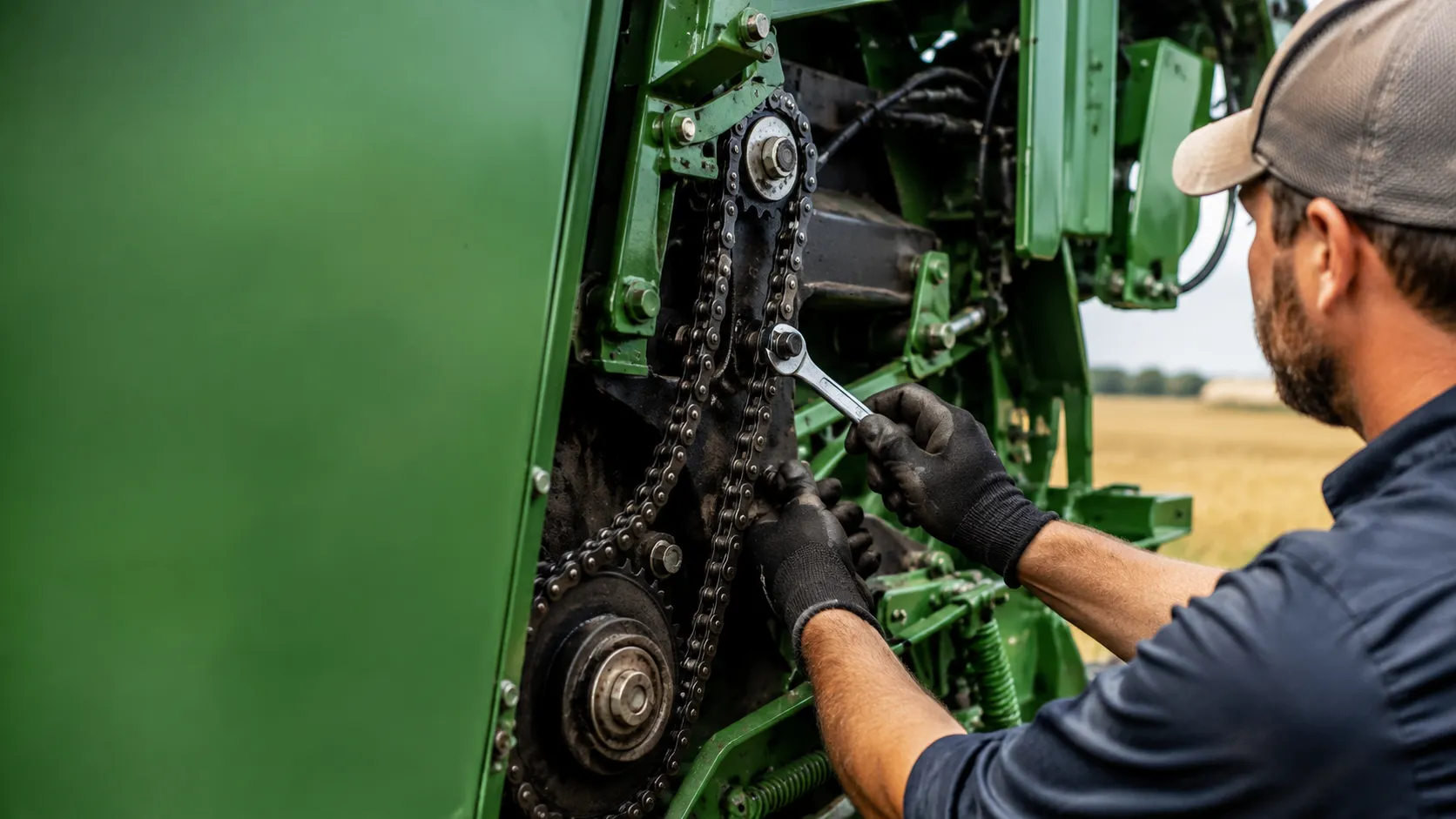
The 9YG-2.24D Standard's reduced maintenance profile centres on the camless pick-up design and the dual-sided 20A chain system. Standard seasonal maintenance includes: pick-up tine inspection and replacement (typically at 800–1,200 bales), chain tension check (each 200 bales), net wrap knife inspection (each season start), bearing greasing (each 100 operating hours), and hydraulic circuit pressure check (before each season). All consumable parts are available from our Buenos Aires spare parts warehouse with typical 5–7 day delivery to most Argentine provinces.
Expected service life for a well-maintained 9YG-2.24D Standard baling 2,000–3,000 bales per season is 10–15 years before major structural refurbishment. Annual maintenance cost — tines, chains, bearings, net wrap consumables — typically runs 2–4% of purchase price on a well-maintained machine, declining as the operator develops familiarity with the specific maintenance requirements of their unit.
Extended Frequently Asked Questions
What documentation comes with the machine at delivery?
Every machine ships with English-language operator and maintenance manual, warranty certificate, certificate of conformity, parts catalogue with all serviceable component part numbers, and installation checklist. For export orders, commercial invoice, certificate of origin, and phytosanitary certificate accompany the shipment documentation.
How do I order spare parts after delivery?
Contact [email protected] with your machine serial number and the part number or description from the parts catalogue. We confirm availability and price within one business day and dispatch from our Buenos Aires warehouse within 5–7 days to most locations.
Is the machine eligible for Argentine agricultural financing?
Argentine agricultural credit lines through Banco de la Nación Argentina and the Secretaría de Agricultura's equipment financing schemes may apply. We provide all technical documentation, certificates of origin, and supporting materials required for financing applications on request.
Can I visit your Buenos Aires facility before placing an order?
Yes. Contact [email protected] to arrange a visit to our Parque Industrial Pilar facility. In-person inspection of current inventory and demonstration is available for buyers considering larger orders or those requiring specific configuration confirmation.
ISO9001‑Certified Manufacturing
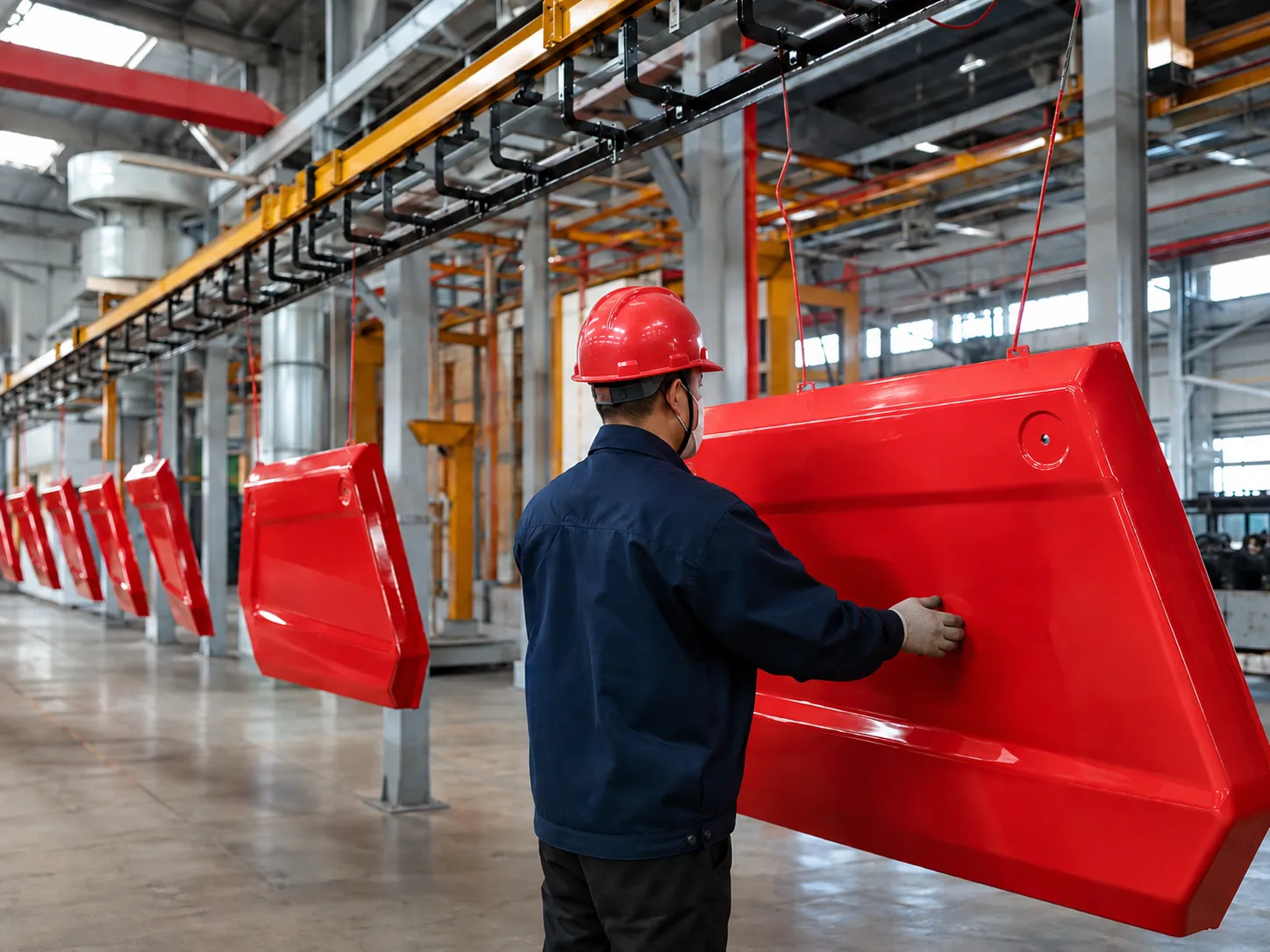
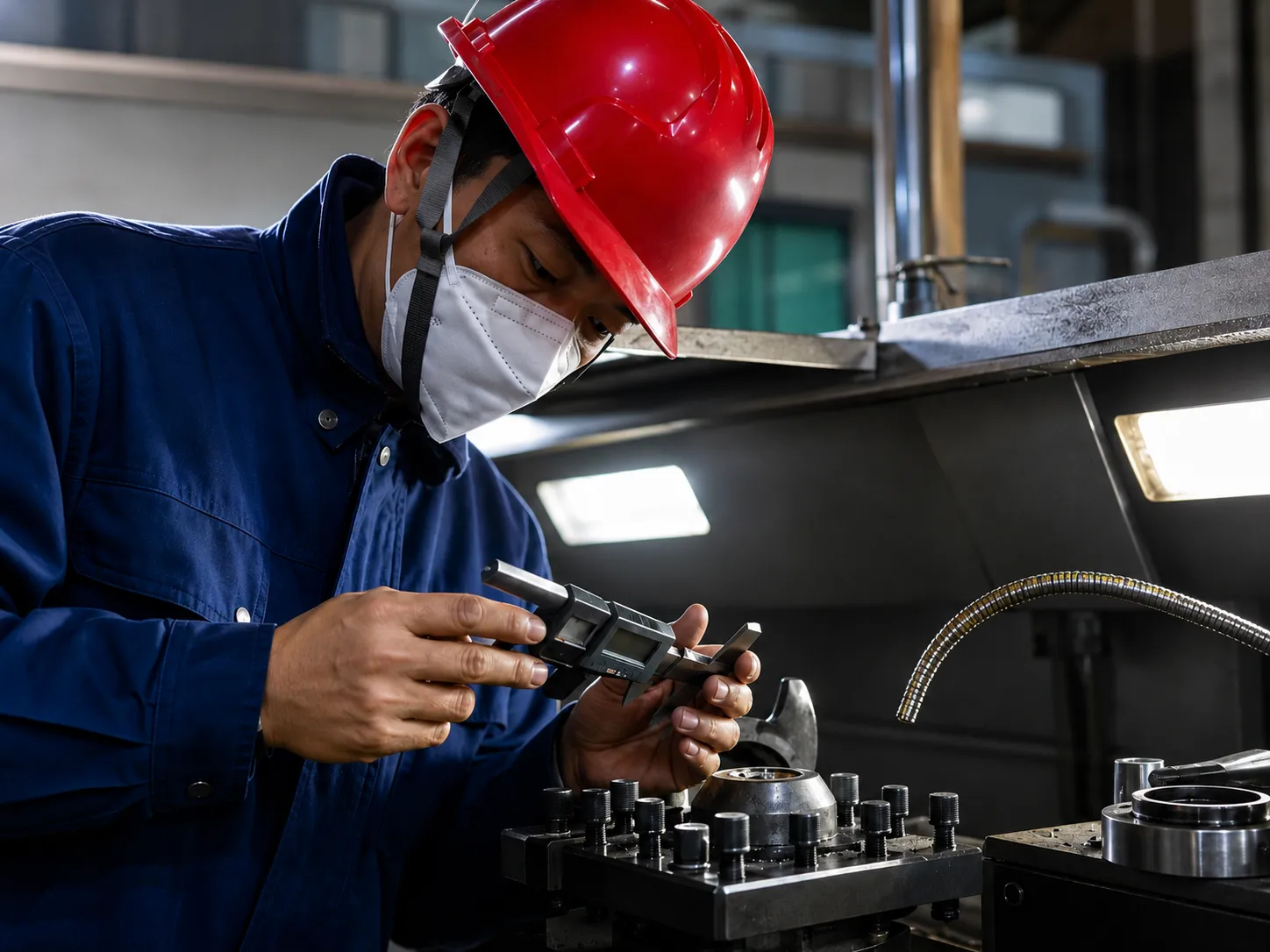
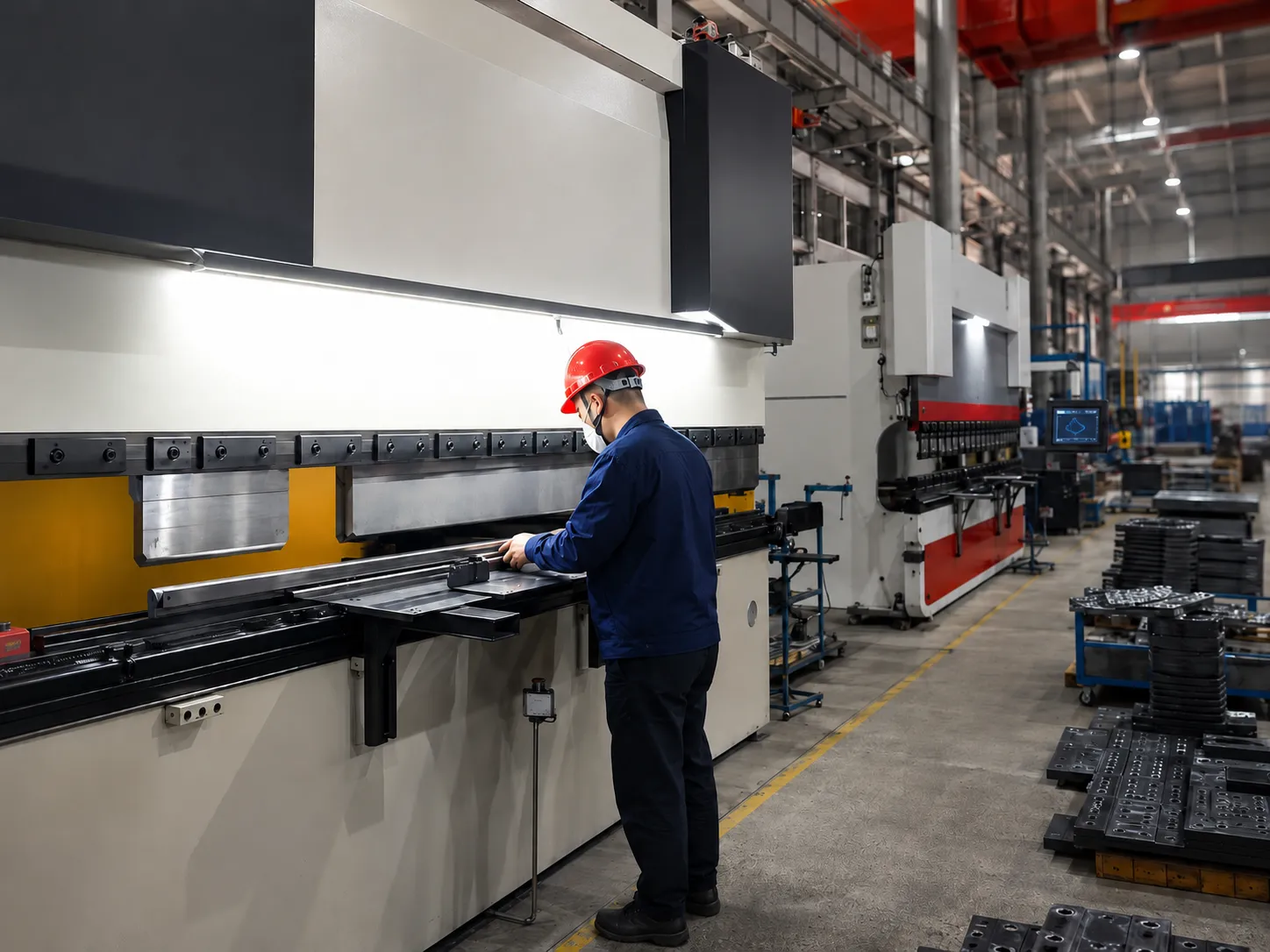
180 engineers operate two ISO 9001:2015‑certified production lines. CNC laser precision, automated welding, and multi‑stage electrostatic coating on every machine that leaves our 32,000 m² facility.
Warranty and After‑Sales: Manufacturer's warranty from delivery. Remote video commissioning included. Direct spare parts ordering from our Buenos Aires warehouse with same‑day quotation.
Explore Ever-Power Forage Equipment
Request CIF Pricing to Your Nearest Port
CIF pricing to Buenos Aires, Rosario, Bahía Blanca, or any international port. Full export documentation included.
Shipping: Ships to 30‑plus countries from Buenos Aires. All export documentation managed. CIF to any global port. [email protected].
Reviews
There are no reviews yet.