
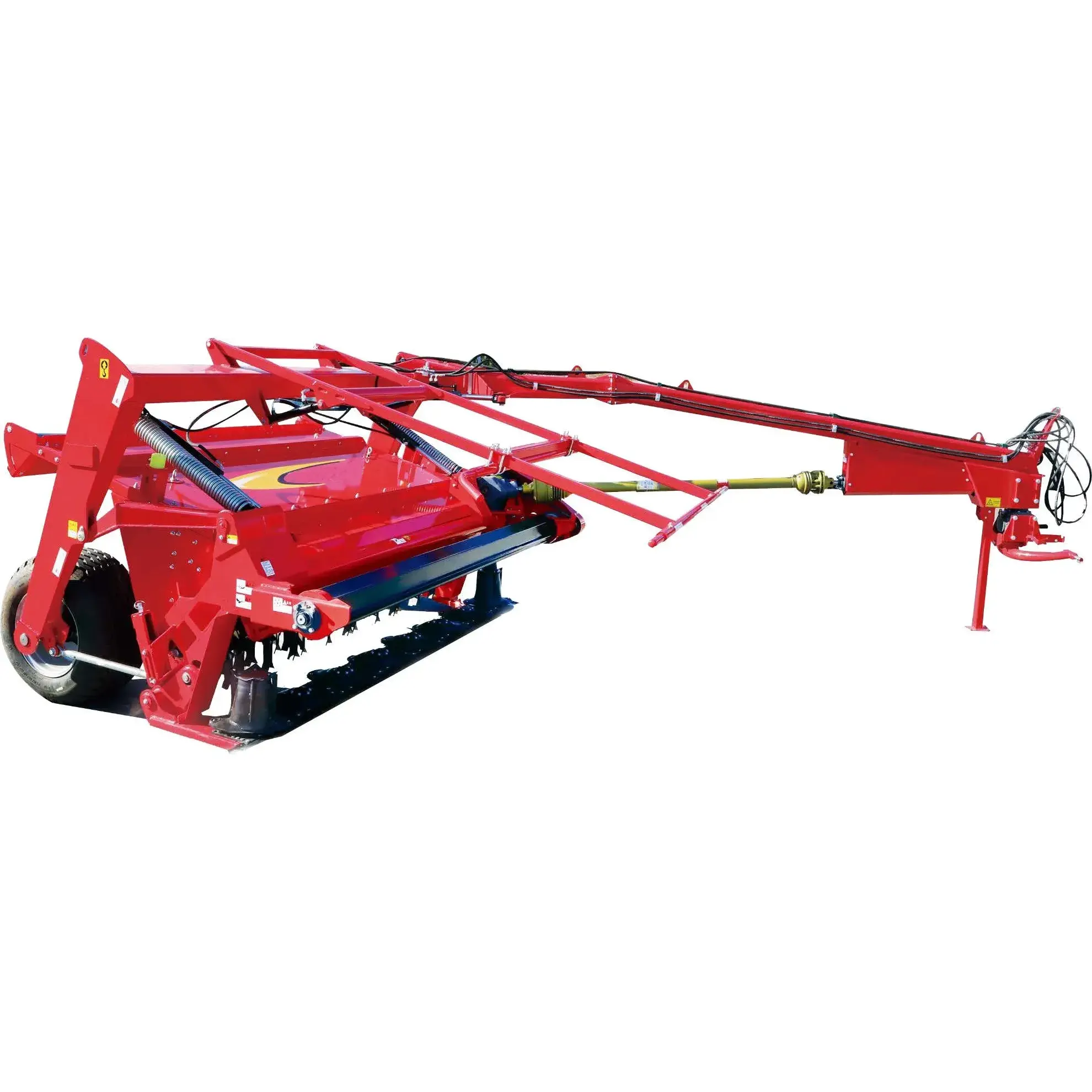
Description
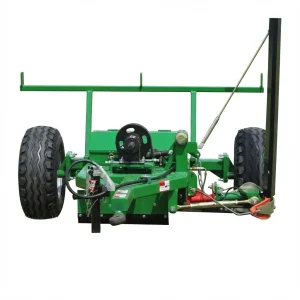
| Specification | Detail |
|---|---|
| Model | 9GQY-3.2 |
| Cutting Width | 3,200 mm |
| Rotary Discs | 8 high-speed rotary discs |
| Power Required | ≥81 kW / 110 HP |
| Working Speed | 8–12 km/h |
| Conditioning System | Integrated roller conditioner |
| Hitch | Side-trailed |
| Cutterhead Float | Super-floating protection device |
| Suspension | Double-suspension — independent cutter and conditioner |

Cut and Condition in One Pass: 25–40% Faster Drying
The Ever-Power 9GQY-3.2 Mower Conditioner combines two operations into one pass: it mows a 3,200 mm swathe with eight high-speed rotary discs and, in the same motion, passes the cut material through an integrated roller conditioning unit that cracks open the waxy cuticle of each stem. The mechanical damage creates multiple moisture escape pathways along the stem's full length instead of confining moisture loss to the cut face. Research consistently shows 25–40% reduction in field drying time for conditioned versus unconditioned forage under equivalent atmospheric conditions.
For Argentine operations with narrow weather windows, the drying time reduction is materially valuable. A three-day drying cycle becomes two days, which often means the difference between a quality first-cut and a second-rate bale caught by rain. For multi-cut operations, the compounded time saving across the season adds to measurable additional hay production from the same land area.
Eight-Disc Rotary Cutting System
The 9GQY-3.2 uses eight high-speed rotary discs across the 3,200 mm cutting width. Rotary disc systems operate on an impact cutting principle: each disc spins at high rpm and the blade tips strike standing stems at high velocity, severing them cleanly. This mechanism allows operating speeds significantly higher than reciprocating cutter-bar designs without the blade loading that limits reciprocating systems at high forward speeds.
At 8–12 km/h, the 9GQY-3.2 covers approximately 2.6–3.8 hectares per hour in practical field conditions. The full 3,200 mm cutting width combined with this operating speed provides the area throughput needed to keep ahead of a following baler during peak harvest periods. Each disc carries replaceable blade tips that can be exchanged without removing the disc, minimising downtime when tips wear or chip on contact with debris.
Integrated Roller Conditioning: The Drying Science
After cutting, the rotary discs deliver material directly to the integrated roller conditioning unit. Two counter-rotating rollers crimp and crack the stem material passing through. The gap between rollers is operator-adjustable to control conditioning intensity: narrow gap for aggressive conditioning of thick-stemmed grasses, wider gap for lighter treatment of leafy legume species where aggressive conditioning risks leaf shatter.
The conditioning mechanism works on two levels. First, mechanical cracking of the stem's outer cuticle layer — the waxy moisture barrier — creates multiple points of moisture exit along the full stem length. Second, crimping disrupts the vascular bundles that carry moisture from the plant's root system into the stem, accelerating depletion of residual stem moisture. Both mechanisms act simultaneously, producing drying time reductions significantly larger than either mechanism alone.
Crop Applications
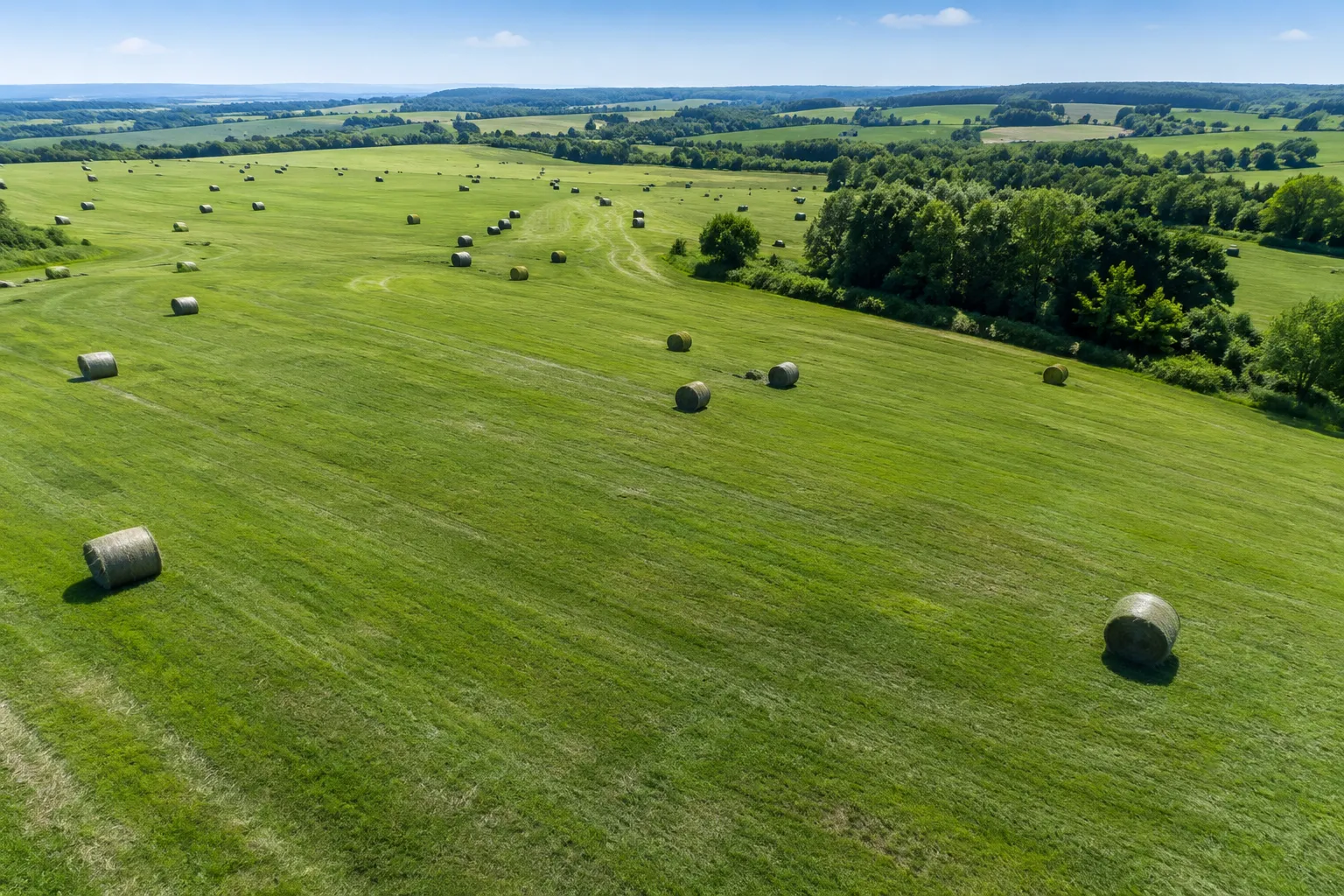
- Ryegrass and Mixed Improved Pasture: The core application in Buenos Aires Province humid pampas. First-cut ryegrass in late September through November is high-yield, high-moisture material where drying acceleration delivers greatest practical benefit.
- Lucerne (Alfalfa): Adjustable roller gap addresses leaf shatter concerns — widen gap to reduce conditioning intensity for premium-grade lucerne, maintaining stem conditioning benefit while preserving leaf quality.
- Reed and Reed Canary Grass: Tall, dense, stemmy material in river-flat environments. Aggressive conditioning intensity delivers greatest drying acceleration for these species.
- Small Grain Forage: Oat, barley, and triticale grown as whole-crop forage. Conditioning treatment accelerates drying of thick stem material.
Why Ever-Power: Verifiable Credentials
The 9GQY-3.2 is produced by an ISO 9001:2015-certified manufacturer (audited by Beijing United Certification) with 100+ registered technology patents, National High-Tech Enterprise recognition (Cert. GR202315000192), AAA Credit Enterprise rating, and the AGMA Best Innovation Award 2023. Two consecutive years of category market leadership reflect sustained buyer preference among professional users.
Tractor Compatibility
The 9GQY-3.2 requires 81 kW (110 HP) minimum at the PTO. Operating at minimum power is possible but reduces speed capacity — tractors producing 110–130 HP deliver the full 8–12 km/h operating speed range. The side-trailed hitch arrangement allows tractor wheels to travel on uncut ground, protecting standing crop ahead.
Integration with the Ever-Power Range
The 9GQY-3.2 operates as the front-end of the forage chain. Its conditioned windrows feed into Ever-Power rakes (9LH-12 transverse, 9LZD-9.0 or 9LZ-6.0 finger wheel rakes) for consolidation to baler pick-up width. Following equipment in the chain — any Ever-Power round baler — benefits from the faster wilting that conditioning produces, particularly important for silage operations where rapid wilt to target moisture limits respiration losses.
Real-World Operating Scenario
A 400-hectare dairy operation in Entre Ríos Province runs the 9GQY-3.2 paired with a 130 HP tractor. The operation produces multi-cut ryegrass silage and lucerne hay across the year. The conditioning advantage shows up most clearly in spring ryegrass operations: pre-conditioning, cuts required three days before reaching baling moisture; with the 9GQY-3.2, two days is the typical window. Across an average season with 8–10 cuts, the cumulative time saving allows the operation to fit an additional cut into the year, materially increasing total annual forage production from the same land area.
Total Cost of Ownership
The 9GQY-3.2 costs more than a plain disc mower of equivalent width. The question is whether conditioning capability justifies the additional investment. For a 150-hectare hay operation taking four cuts per season, the drying time reduction saves approximately 4–6 days of field exposure per season. Reduction in weather-damaged hay volume from this exposure reduction typically exceeds the annual depreciation cost difference between conditioning and non-conditioning mowers of equivalent width.
Frequently Asked Questions
Will conditioning damage lucerne leaf quality?
Aggressive conditioning causes leaf shatter in lucerne. The adjustable roller gap allows conditioning intensity to be reduced for lucerne operations. Set the gap to the wider position recommended in the operator manual for legume species. Some leaf shatter is unavoidable in any conditioning system; the adjustable gap minimises it while preserving meaningful drying time benefit.
What windrow width does the 9GQY-3.2 produce?
The machine deposits a windrow of approximately 1.8–2.4 m width depending on operating speed and crop density. This should be raked or merged before baling to match the baler pick-up width. The 9LH-12 or finger wheel rakes are matched for this windrow width range.
Can the 9GQY-3.2 work in wet conditions after rain?
Light surface moisture does not prevent operation. Significant standing water, waterlogged soil that causes machine sinking, or crop so wet that it wraps the conditioning rollers should be avoided. Wait until surface conditions allow safe tractor operation.
What is the production lead time?
30–60 days from order confirmation depending on current schedule. Contact [email protected] for current availability.
Regional Application Context
The 9GQY-3.2 is particularly suited to the intensive lucerne and ryegrass operations of the Buenos Aires pampas humid zone. Faster drying from conditioning is most valuable in humid conditions with limited drying windows — precisely the conditions prevalent in the high-rainfall agricultural zones of Buenos Aires, Entre Ríos, and Santa Fe provinces. In drier Córdoba conditions, the conditioning advantage remains valuable but is somewhat reduced because unconditioned drying is faster in low-humidity conditions. For Patagonian and arid-zone operations, conditioning may not be required at all — consult our team for application-specific advice.
For dairy operations specifically, the conditioning advantage compounds: faster wilt to silage moisture means less respiration loss between cutting and bale sealing, supporting better silage fermentation quality and higher feed value retention in the stored forage. For commercial hay operations selling to quality-sensitive buyers, conditioning supports the leaf retention and quick stem drying that protect the visual and nutritional grade of the finished bale.
Comparing Ever-Power to Established European Brands
Buyers evaluating the 9GQY-3.2 alongside European alternatives typically focus on three points. On price, Ever-Power machines carry a 25–45% advantage at equivalent specifications. On specification, key technical features match or exceed equivalent-class European machines. On parts availability, our Buenos Aires operation stocks current-model parts with 5–7 day delivery to most provinces.
Pre-Purchase Qualification
- Tractor produces at least 81 kW (110 HP) at the PTO — 110–130 HP recommended for full operating speed range
- Annual mowing area of 100+ hectares justifies the conditioning investment over plain disc mower alternatives
- Operation handles primarily gramineous forage (ryegrass, fescue, lucerne with care, reed species)
- Service access supports 5–7 day parts dispatch from Buenos Aires
- Lead time of 30–60 days accommodates seasonal planning
Send your answers to [email protected] for a personalised recommendation within 24 hours.
Order and Delivery Process
Day 1–2: enquiry and quotation with CIF price within 24 hours. Day 3–7: order confirmation with deposit, production slot allocated. Day 5–65: production. Quality inspection, documentation, and container loading at our Parque Industrial Pilar facility. Ocean freight to destination port. Remote video commissioning support included.
Maintenance and Service
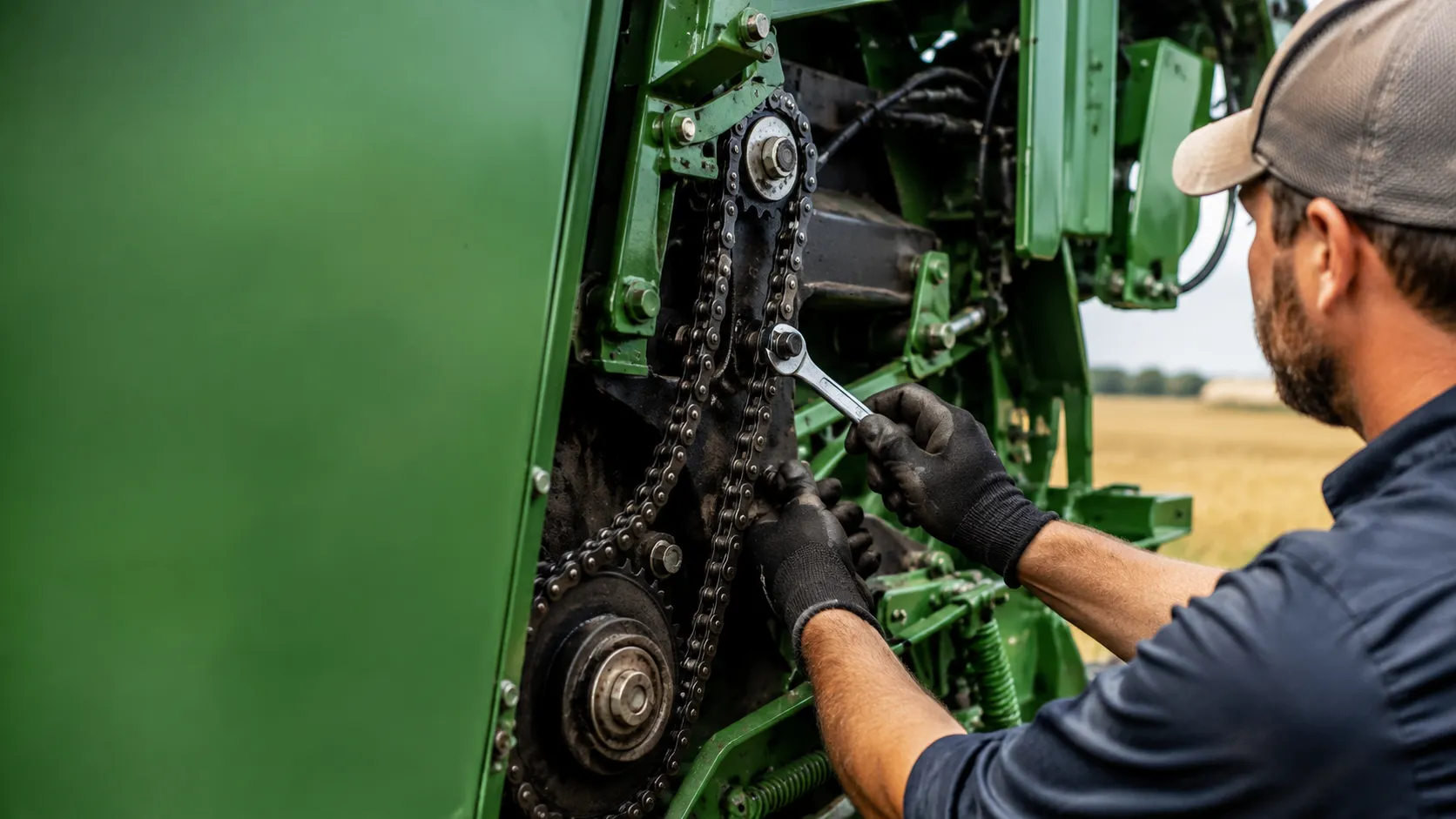
The 9GQY-3.2's primary maintenance items are the disc blade tips, the conditioning roller surface, and the main gearbox fluid. Blade tips are inspected after every full-day operating session and replaced when wear reduces cutting quality. Conditioning roller surface is inspected at each season start for scoring or excessive wear. Gearbox fluid is changed at the intervals specified in the operator manual — typically annually or at 500 operating hours. The super-floating mechanism pivot points are lubricated at each pre-season inspection. PTO drive shaft universal joints are greased at 50-hour intervals during the operating season. All grease points are identified in the lubrication diagram with specified grease grades and quantities. Replacement blade tips, conditioning roller assemblies, and bearings are stocked at our Buenos Aires spare parts warehouse for same-week dispatch.
Pre-Season Preparation Checklist
Before the first use of each season, complete a full pre-season inspection covering all eight disc blade tip conditions, conditioning roller surface integrity, gearbox fluid level and condition, hydraulic system pressure verification, and PTO drive shaft inspection. Replace any wear items showing damage beyond the operator manual's specification limits before the season begins rather than waiting for in-season failure. Pre-order replacement consumables — blade tips, hydraulic seals, lubricants — from our Buenos Aires warehouse in August to ensure delivery before September use.
ISO9001‑Certified Manufacturing
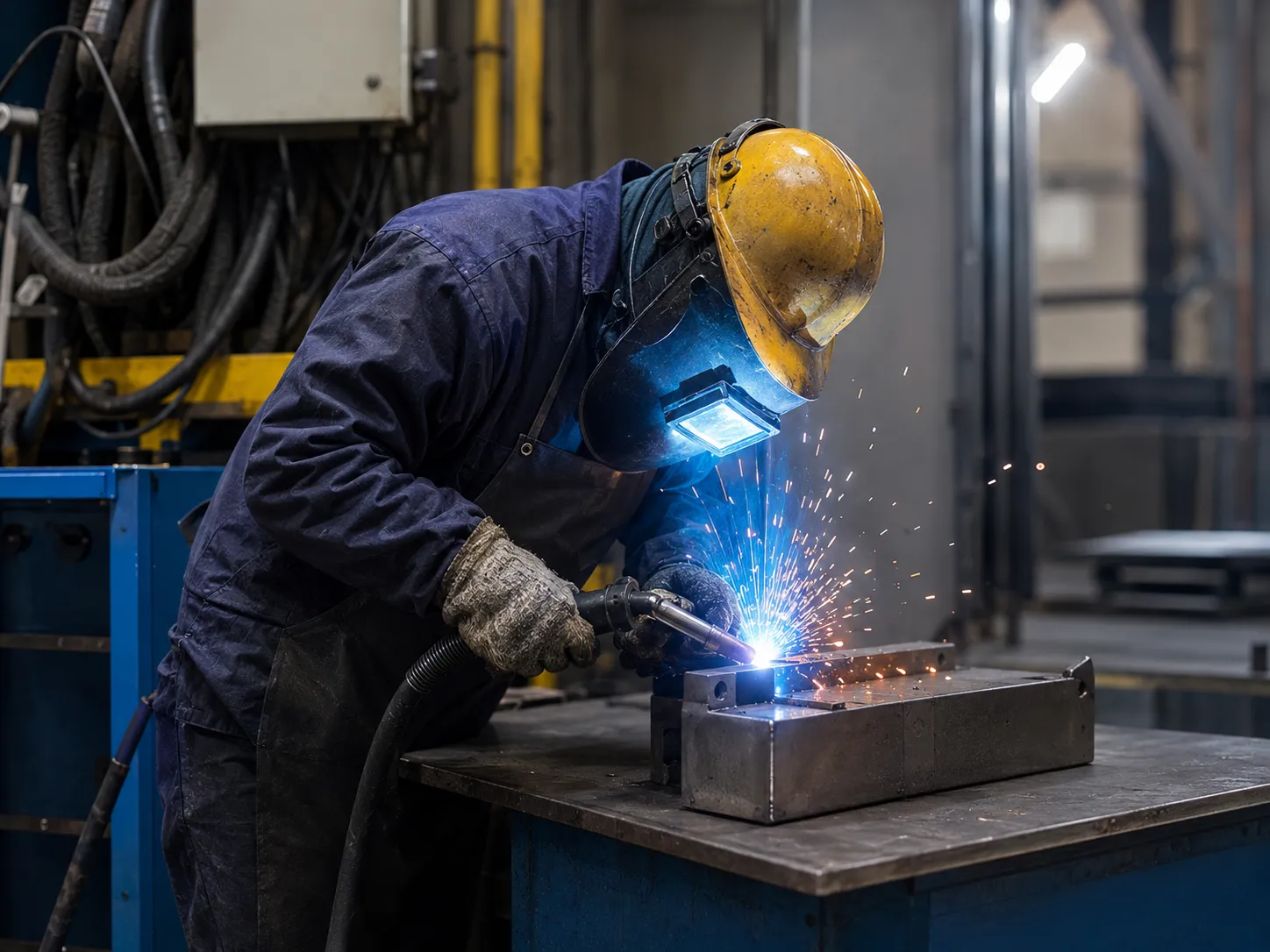
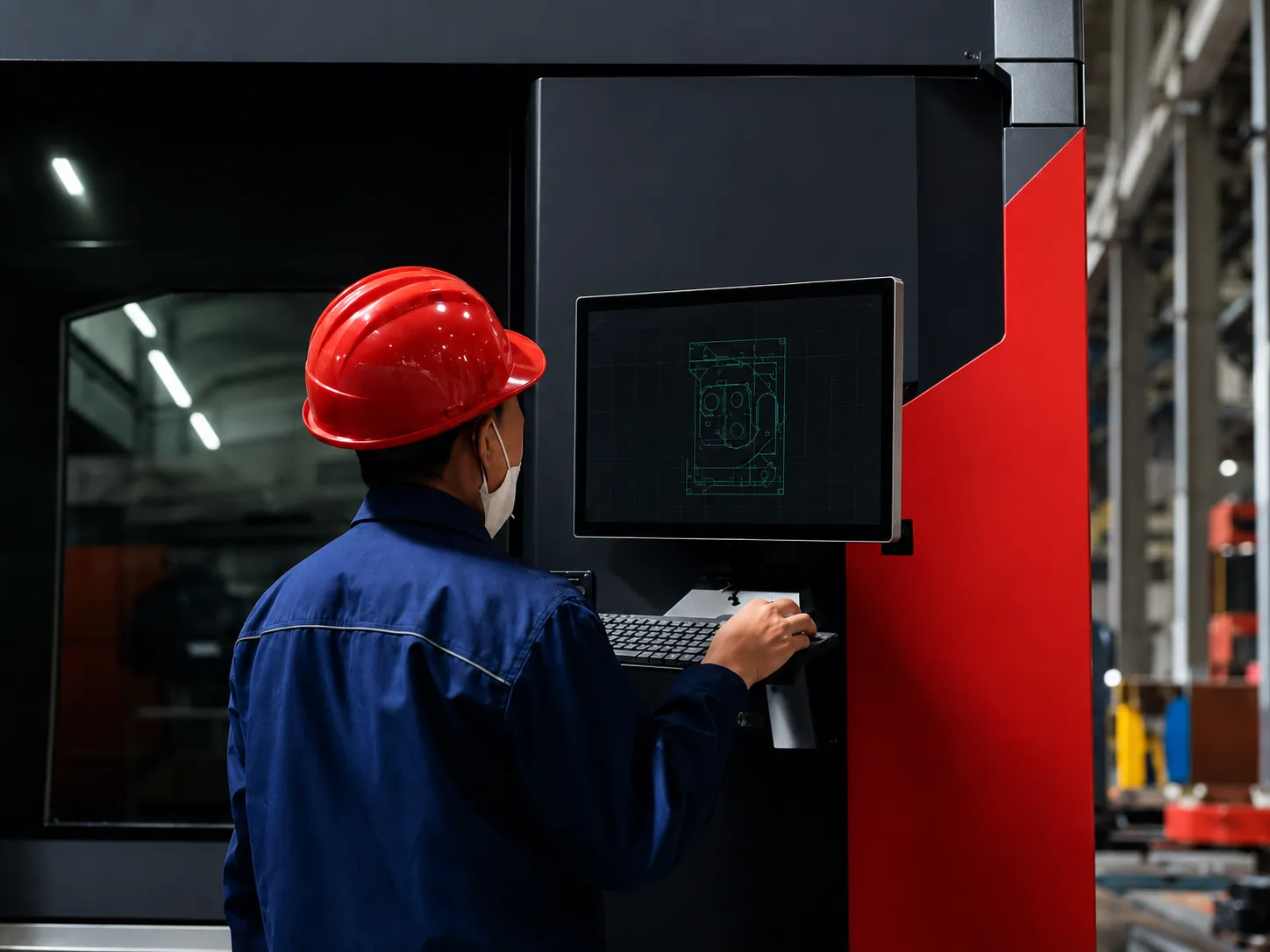
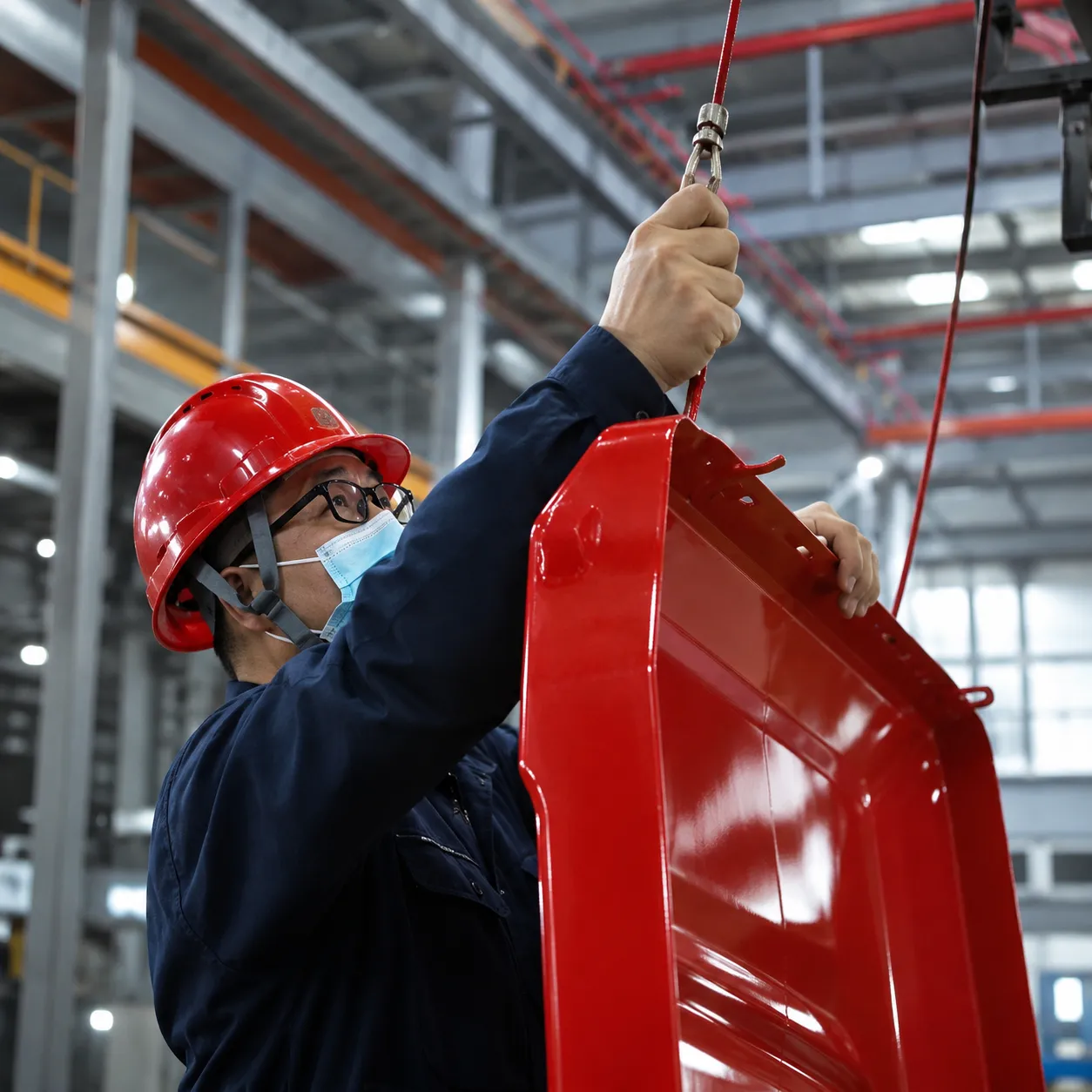
ISO 9001:2015 certification covers design, manufacture, and after‑sales. 100‑plus registered technology patents. CNC cutting, robotic welding, and electrostatic coating documented in our quality management system.
Warranty and After‑Sales: Manufacturer's warranty included. English‑language documentation. Dedicated Argentine technical support. Parts dispatched from Parque Industrial Pilar within 5–7 business days.
Explore Ever-Power Forage Equipment
Ask for a Full Spec Sheet and Quote Today
Receive a complete technical specification sheet, current lead time, and competitive pricing. Every enquiry answered within 24 hours.
Shipping: Export‑ready from Argentina. CIF to Buenos Aires, Rosario, Bahía Blanca, or any international port. [email protected].
Reviews
There are no reviews yet.